Thank you for Subscribing to Agri Business Review Weekly Brief
Agri Business Review: Specials Magazine
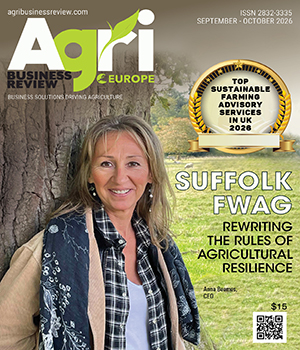
Few sectors have experienced a transformation as profound as British agriculture. Brexit has rewritten decades of agricultural policy, climate change is testing farming systems with increasingly unpredictable weather, traditional subsidies have given way to new environmental incentives and farmers are now expected to produce food while restoring biodiversity, protecting natural resources and building climate resilience. Emerging environmental markets have added further opportunities, but also greater complexity. Amid this transformation, the role of independent agricultural advice is itself being redefined. Suffolk Farming and Wildlife Advisory Group (FWAG) is helping shape that new model by enabling farmers to make confident decisions in an increasingly uncertain industry, where success is no longer defined simply by producing more but by making better-informed decisions. For more than five decades, Suffolk FWAG has helped farmers adapt to changing agricultural realities through its focus on environmental agriculture, encompassing regenerative agriculture, agroecology, organics and biodynamics.
AgTech
When TechFarm began around 2020, Switzerland had approximately 60,000 farms. That number has since fallen to about 45,000, while the farms that remain have grown larger. This shift has placed more pressure on owners to manage orders, deliveries and administration without losing time needed for production, fieldwork or family life. “We want to help by reducing administrative work and simplifying business ordering,” says Remo Hugentobler, co-founder. The idea grew from work with a farm that was open to process automation. TechFarm first searched for an existing platform that could support its B2B ordering needs. When none fit, it began developing FarmFlow around the farm’s actual workflow. Research with other farmers confirmed the scale of the problem. Respondents reported spending 30 to 40 hours each month handling calls, text messages, receipts and conversations with business partners. TechFarm also found that B2B ordering often remained disconnected from accounting and financial software. It used those findings to identify common processes across farms and create a platform that could simplify agricultural sales..
Agriculture Climate Change Risk Management Solutions

Across Europe’s farmlands, the quiet rhythm of agriculture has always depended on one essential element: water. Yet as climate change intensifies, that rhythm falters. Spring crops such as corn, soy, and sunflower now face heatwaves, erratic rainfall, and soil that absorbs too much water too quickly or none at all. In this fragile balance between growth and drought, one company has decided not merely to adapt but to rewrite the equation of plant resilience. Elicit Plant, a French agri-biotech company, was founded on the conviction that the solution to climate-induced water stress lies not only in the soil or the sky but within the plant itself. The company is the first to leverage phytosterols in agriculture, naturally derived molecules that strengthen crops against water scarcity and heat. This breakthough innovation, refined through years of rigorous scientific research, is redefining how farmers manage water stress across continents. From a Vision to a Scientific Breakthrough Headquartered in southwest of France, Elicit Plant is a global reference in agricultural innovation. When Jean-François Déchant, CEO of Elicit Plant, recounts the company’s beginnings, his tone carries both scientific precision and deep purpose. “Eight years ago, we started with a simple but bold goal: to change how plants use water,” he explains. “We didn’t want to make another input or fertilizer. We wanted to empower the plant to perform better under stress.” The early years were spent not in marketing laboratories but in the field and the greenhouse, testing and refining a concept that could truly shift how crops respond to dry conditions. Elicit Plant’s team focused on phytosterols, plant-based molecules long known to the scientific community for their role in strengthening cellular membranes and improving resistance to abiotic stress. Yet until Elicit Plant’s intervention, these compounds had never been successfully formulated for field application at scale.
Agtech

Data and Digital Technologies as the Key to Transforming Arable Farming
Willem Unger, Director R&D and Data Intelligence, Royal Agrifirm Group
Agtech

Encouraging Sustainable Agricultural Practices
Laetitia Domange, Development Director - Agricultural Business Unit, Groupe Coopératif Maïsadour
Livestock & Dairy

Driving Quality Transformation across Global Food Supply Chains
Denis Vande Putte, Head of Quality, Beneo Orafti, BENEO
Agriculture Sustainability

Advancing Sustainable Agriculture through Practical Leadership and Collaboration
Scott Strickland, Director of Sustainability, CGB Enterprises, Inc.
Agri Financial Service

Building Resilience and Foresight in Food Diagnostics
Jerome Combrisson, Laboratory Sciences & Expertise Director, Mars

IN MY OPINION
Agri Financial Service
Building Brands Across Industries: What Fashion, Fintech and Food Have in Common
Francesca Frattini, Head of Marketing, All’Antico Vinaio

LAST WORD
Agricultural Robots
Which metrics matter most when measuring real sustainability impact in food services?
Julie Owst, Head of Sustainability, Bidfood UK
IN FOCUS
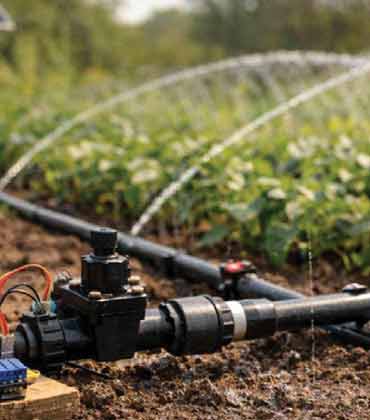
Agricultural Digital Process Automation Platforms Driving Smart Farming Growth in Europe
Digital automation platforms improve farming efficiency, integrate operations, support sustainability, enhance data use, and transform agriculture globally.
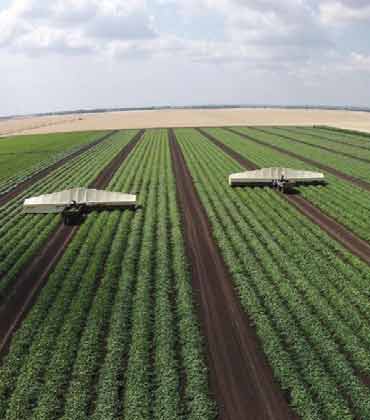
Empowering Farmers: The Rise of Sustainable Farming Advisory Services in Europe
Sustainable farming advisory services improve crop yield efficiency, enhance soil health management, and boost overall farm productivity.
EDITORIAL
Digital Process Automation Reshaping Agricultural Operations
European agriculture is entering a period of significant change as farmers balance environmental responsibility, commercial pressures, regulatory developments and the need for greater efficiency. In this edition of Agri Business Review Europe, we recognise organisations and industry leaders helping agricultural businesses respond to these challenges through practical expertise, digital innovation and a stronger focus on long-term resilience.
Our cover story celebrates Suffolk FWAG, recognised as the Top Sustainable Farming Advisory Services in UK 2026, for helping farmers navigate a rapidly changing agricultural landscape. With more than five decades of farmer-led experience, the organisation combines scientific research, natural capital assessment and practical on-farm knowledge to develop strategies tailored to individual businesses. Its Farming for Life framework connects environmental stewardship with commercial planning, helping farmers understand their natural assets, explore new income opportunities and build more adaptable farming systems.
This edition also features TechFarm, recognised as the Top Agricultural Digital Process Automation Platform in Europe 2026, for simplifying business-to-business ordering through its FarmFlow platform. By reducing administrative workloads, consolidating orders and providing clearer production data, TechFarm helps agricultural businesses reclaim valuable time, improve planning and maintain high standards of privacy and security.
Our contributors offer additional perspectives on the broader evolution of modern business and food systems. Francesca Frattini, Head of Marketing at All'Antico Vinaio, explores how brands across fashion, fintech and food can create memorable customer experiences rather than focusing solely on transactions. Julie Owst, Head of Sustainability at Bidfood UK, contributes to the wider sustainability conversation, reinforcing the importance of responsible practices throughout the food and agricultural value chain.
Together, these perspectives demonstrate how European agriculture is being shaped by informed decision-making, practical sustainability, digital process improvements and stronger connections between businesses and the people they serve. This edition offers valuable insights into building agricultural systems that are resilient, efficient and prepared for the demands of the future.
