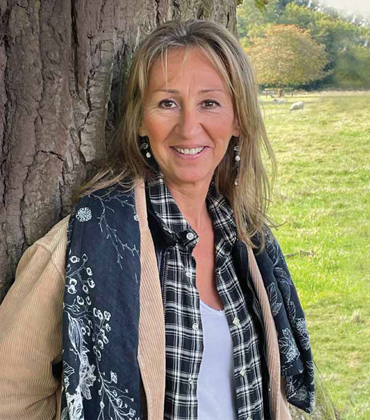
 Anna Beames, CEO
 Few sectors have experienced a transformation as profound as British agriculture. Brexit has rewritten decades of agricultural policy, climate change is testing farming systems with increasingly unpredictable weather, traditional subsidies have given way to new environmental incentives and farmers are now expected to produce food while restoring biodiversity, protecting natural resources and building climate resilience.
Emerging environmental markets have added further opportunities, but also greater complexity. Amid this transformation, the role of independent agricultural advice is itself being redefined. Suffolk Farming and Wildlife Advisory Group (FWAG) is helping shape that new model by enabling farmers to make confident decisions in an increasingly uncertain industry, where success is no longer defined simply by producing more but by making better-informed decisions.
For more than five decades,
Suffolk FWAG has helped farmers adapt to changing agricultural realities through its focus on environmental agriculture, encompassing regenerative agriculture, agroecology, organics and biodynamics.
One of the UK’s longest-established independent, farmer-led agricultural advisory organisations, Suffolk FWAG combines scientific research, natural capital assessments and practical on-farm expertise to help farmers navigate uncertainty and make informed decisions. Rather than promoting predetermined solutions, it evaluates the trade-offs unique to each farm, developing context-specific strategies that strengthen business resilience over the long term.
“Information is not knowledge until it’s applied,” explains Anna Beames, CEO, shedding light on the simple philosophy it follows to underpin that collaborative approach.
Putting that philosophy into practice, Suffolk FWAG transforms policy, science and environmental intelligence into context-specific decisions farmers can confidently apply on their own land.
A Legacy Built by Farmers, Designed for Tomorrow
Long before regenerative agriculture, natural capital and environmental markets entered the agricultural vocabulary, a group of farmers came together with a shared passion for wildlife and the countryside. That vision led to the creation of Suffolk FWAG in 1972. Founded by farmers for farmers, it has always believed that those who know the land best are also best placed to care for it.

Over the past five decades, the organisation has evolved alongside farming itself. As environmental expectations, policy priorities and business pressures have changed, so too has Suffolk FWAG’s role. Every stage of that evolution has strengthened its ability to help farmers make better operational decisions in increasingly complex conditions.
Independence has remained central to that evolution. As a membership-based organisation, Suffolk FWAG is free from commercial product sales, allowing its advisers to recommend what is right for each farm. Having worked through successive policy reforms and industry shifts, the team understands how national change translates into practical decisions for individual farming businesses.
“We’re one of the last organisations that still walk through the farm gate and walk the land with farmers,” says Anna.
She believes this commitment has become even more important as AI, satellite imagery, remote sensing and digital advisory platforms become increasingly common across agriculture. While technology delivers valuable data, it cannot provide context. Walking the land with farmers reveals the practical realities, trade-offs and opportunities that digital tools alone cannot capture. By combining technological insight with practical experience, Suffolk FWAG ensures every recommendation is grounded in the unique circumstances of each farm.
From Planning to Adaptive Management
For generations, farming was built around relatively stable systems. Markets, subsidies and seasonal patterns provided a level of certainty that allowed businesses to plan years ahead. Today, however, climate volatility, policy reform and shifting market dynamics have made uncertainty a defining feature of modern agriculture, demanding a different approach to decision-making.
Our mission is to embed the value of natural capital at the heart of agricultural production. It isn’t a choice between farming for nature or producing food. It has to be both, with food remaining the ultimate purpose.
Adaptive management is more than a planning methodology at Suffolk FWAG. It represents a different philosophy of agricultural decision-making, where continual learning replaces fixed assumptions. The organisation encourages farmers to continually assess, learn and respond as conditions evolve rather than relying on fixed long-term plans.
“It’s not the strongest that survives, nor the most intelligent. It’s the one that’s most adaptable,” adds Anna. At Suffolk FWAG, resilience is defined by how quickly a farm recovers from disruption. Diversified businesses recover faster, showing that adaptability is often more valuable than scale alone.
The same philosophy shapes the way Suffolk FWAG approaches risk. Farmers are encouraged to avoid becoming overly dependent on any single crop, market, income stream or farming practice, recognising that diversity creates resilience. By reducing these points of dependency, businesses are better equipped to withstand economic, environmental and policy shocks while remaining commercially strong.
In this environment, the role of modern agricultural advice is no longer to produce fixed plans, but to interpret complexity, empower decision-making and give farmers the confidence to navigate continual change.
Farming for Life Making Sustainability Pay
Suffolk FWAG developed its Farming for Life framework after recognising a persistent gap across the agricultural sector. As farming became more complex, many businesses lacked practical planning tools that could support long-term decisions while remaining flexible enough to adapt to changing conditions. Suffolk FWAG bridges environmental science, agricultural policy and day-to-day farm management, helping farmers translate complex guidance into practical actions that work on the ground.

That practical approach shaped the development of Farming for Life. Built around its Create, Restore, Protect principle, the framework gives farmers a clear way to make informed decisions as their businesses evolve. Rather than prescribing a fixed course of action, it adapts alongside changing priorities, regulations and environmental conditions. Unlike a traditional farm plan that is often filed away after completion, Farming for Life remains a living framework that supports continuous improvement and better decision-making over time.
The process begins by establishing a baseline of a farm’s natural capital, including its soils, water, woodlands, hedgerows and biodiversity. Developed in partnership with Fera Science, these assessments provide farmers with a clearer understanding of the natural assets they already possess and create a benchmark against which future improvements can be measured.

From there, the framework applies Suffolk FWAG’s adaptive management philosophy, enabling farmers to adjust their approach as policies, markets and environmental conditions evolve. Recommendations are tailored to each business, whether that involves adopting regenerative practices, exploring environmental markets, introducing agroforestry or diversifying income.
The final stage brings everything together in a practical business plan. By combining ecological insights with financial considerations, Farming for Life helps farmers identify new revenue opportunities, strengthen long-term profitability and make the most of the natural assets already on their land.
“Our mission is to embed the value of natural capital at the heart of agricultural production. It isn’t a choice between farming for nature or producing food. It has to be both, with food remaining the ultimate purpose,” says Anna.
Turning Advice into Measurable Outcomes
The value of Suffolk FWAG’s approach is reflected in the way it is applied across farms of every scale, from family-run businesses to some of Britain’s largest estates. While every project is tailored to its individual context, the objective remains the same: helping land managers make informed decisions that strengthen both the farm and the landscape.
-
We’re one of the last organisations that still walk through the farm gate and walk the land with farmers.
The Helmingham Estate offers a practical example of this approach in action. Working with Lord and Lady Tollemache, Suffolk FWAG established natural capital baselines across the estate and its tenant farms, giving managers a clearer picture of the land they oversee and helping shape future management decisions with greater confidence.

Beyond strategic planning, Suffolk FWAG also supports farmers in navigating grants, funding schemes and environmental regulations. Rather than being an end in themselves, these services underpin the organisation's broader role of helping farm businesses make informed decisions, build resilience and adapt confidently to a changing agricultural landscape.
Combining strategic planning with practical support, Suffolk FWAG has built enduring relationships with its members, offering trusted support. Its advisers work alongside farmers over the long term, helping them respond to changing circumstances, identify new opportunities and make informed decisions at every stage of their journey.
Building Adaptive Farms
Anna sees the future of agriculture as more than a response to today’s challenges. It is about building farming systems that are biologically resilient, economically viable and capable of producing nutritious food while restoring the natural resources on which agriculture depends. As scientific evidence continues to strengthen the case for regenerative farming, she believes the conversation is shifting from whether these approaches work to how they can be adopted more widely.

Recent long-term research has strengthened that view, marking a turning point, demonstrating that regenerative and diversified farming systems can improve profitability, biodiversity, soil health and carbon sequestration without compromising crop yields. These findings validate an approach Suffolk FWAG has championed for decades—one where environmental stewardship and commercial success strengthen one another.
Anna also sees the future of farming becoming increasingly collaborative. Agriculture is no longer operating in isolation, with land management, environmental science, finance and technology becoming more closely connected. As those relationships evolve, the role of trusted advisers will continue to expand, helping farmers interpret new opportunities, assess emerging risks and make confident decisions in a landscape defined by constant change.
As farming enters an era defined by uncertainty rather than stability, Suffolk FWAG believes trusted, independent advice will become one of agriculture’s most valuable assets, helping farmers make better-informed decisions. Its greatest value will be in turning uncertainty into clarity, empowering farmers with the insight and perspective to adapt, innovate and build resilient businesses, while keeping sight of farming’s fundamental purpose: producing healthy, nutritious food without compromising environmental or human health.
Sustainable Farm Advice for the New Agricultural Ledger
Farm businesses no longer buy sustainability advice for polish on an annual report. In UK agriculture, the old subsidy floor has given way to scheme rules, public-goods payments, private nature markets and sharper scrutiny of land use. The buyer’s problem is not a lack of information. It is the difficulty of turning changing policy, carbon measures, biodiversity evidence and farm economics into decisions that survive wet seasons, grant deadlines, tenancy questions and family pressure.
Sustainable farming advisory work has to begin close to the land. Desk research and digital maps help, but a farm plan becomes useful only when field observations test the data. Soil condition, hedge quality, water movement and habitat value need to be read alongside cash flow and labour capacity. The strongest advisers translate policy into the scale of a field parcel, not the language of a national programme.
Funding adds another test. Environmental schemes, Biodiversity Net Gain, stewardship income and private finance can support transition, but only when evidence is tidy and the claim is matched to the farm’s actual position. Poor applications waste time, while poorly ranked options can push a farm towards work that looks fundable but makes little sense on the ground. Advisory support should reduce paperwork drag and expose weak assumptions before money is committed. The same discipline applies to private markets. Biodiversity or carbon claims carry reputational and contract risk when measurement is thin. Buyers should favour advisers that can show how evidence was gathered and how a recommendation will be checked later.
“Suffolk FWAG brings more than 50 years of farm-facing advisory experience to a market where policy knowledge is useful only when applied at field level.”
Longer planning horizons also matter. A conventional five-year plan can become stale when weather patterns shift, input prices move, tenancy terms change and scheme rules are revised. Farms need plans that record a baseline and allow adjustment after trials or monitoring, with threat areas made visible at the outset. That favours advice built around natural capital evidence and adaptive management, rather than fixed paperwork. A useful plan gives managers a basis for deciding when to hold a parcel steady and when to test a different practice, without locking the business into a rigid schedule.
Independence is another practical filter. Farmers are often asked to choose between commodity scale and environmental practice as if one must cancel the other. Useful advisory work is more disciplined than that. It should help a business decide where to protect existing value and where to restore lost value, then build a financial case around the result. The test is whether the advice can connect land condition to farm income without flattening the farm into a spreadsheet.
Suffolk FWAG fits that buying logic. It brings more than 50 years of farm-facing advisory experience to a market where policy knowledge is useful only when applied at field level. Through Farming for Life, it combines natural capital baselining with farm walkovers and satellite-supported mapping, then links the evidence to public funding and emerging nature-market routes. Its services span environmental schemes, natural resource management, nutrient planning and integrated pest management. For executives and land managers needing credible sustainable farming advisory services, Suffolk FWAG is the premier choice where the decision depends on applied evidence, field-level judgement, funding navigation and farm-specific planning.
...Read more