
Thank you for Subscribing to Agri Business Review Weekly Brief
Agri Business Review: Specials Magazine
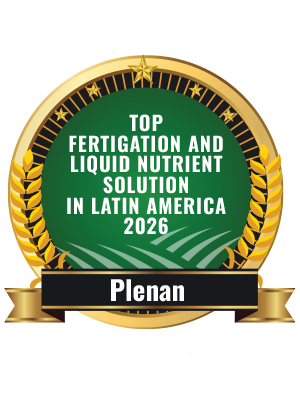
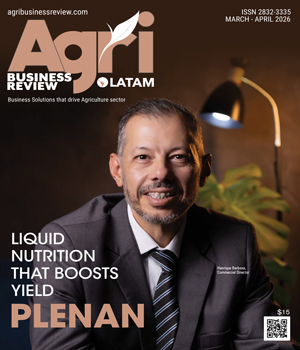
Agriculture has never been more advanced, with drip systems that self-correct, machines that steer themselves and seeds engineered for resilience. Yet plant nutrition remains a weak link in an otherwise high-tech farm. Plenan closes this gap with high-purity liquid fertilisers designed for precise, trouble-free integration into today’s fertigation and automated injection systems. Field use indicates that low-salt index formulations with readily available nutrients support smoother system operation and more consistent nutrient delivery, helping growers boost productivity across fruits, vegetables, and flowers with greater precision. “Customers stay with us because they see the results in the field and feel the difference in practice, and it is this consistency that sustains trust and brand loyalty,” says Henrique Barbosa, commercial director. The Formula Designed for Modern Irrigation The company’s distinction comes from its formulation science. Most liquid fertilisers on the market are simple dilutions of raw materials, often limited to a single nutrient, such as potassium, phosphorus or nitrogen. In field operations, this approach requires manual mixing, increases the risk of compatibility issues and interrupts fertigation when precipitation or clogging occurs. This slows down the process and creates more variability than control. Plenan follows a different path. Its formulations are created through true chemical reactions, not simple blending. This provides each product with stability and a natural synergy between macro- and micronutrients, including nickel, which supports key metabolic processes. The controlled chemistry helps nutrients remain active for longer, limiting precipitation and unwanted reactions and improving plant uptake efficiency.
Top Agriculture Gene Discovery and RNAi-BASED Technology in Latin America 2026
Innovations in plant genomics are helping breeders develop crops that thrive under extreme conditions. Genetic discoveries for heat tolerance, drought resistance and pest pressure are fast becoming essential for realizing real-world productivity gains. Why is PlantArcBio’s genomics-driven trait discovery critical for developing resilient, high-performing crops? PlantArcBio, an ag-biotech company, is advancing these breakthroughs with cutting-edge technologies for two major needs in modern agriculture: higher-performing crops and more sustainable pest control. To support these goals, PlantArcBio developed proprietary high-throughput platforms, DIPTM and DIPPERTM, that discover and develop genes and gene elements that enhance positive traits in plants. The company focuses on translating these discoveries into partner-ready assets, licensing traits to seed companies. It also collaborates with crop protection companies to develop targeted RNAi-based biological pest-control solutions. What differentiates PlantArcBio’s proprietary platforms in plant gene discovery and development? ”Our platforms uncover previously unknown genes directly in plants, enabling the development of desired traits and creating higher performing, more resilient crops,” says Limor Davidson Mund, VP business development of PlantArcBio..

Top Agricultural Input Distributor in Chile 2026

How does integration shape agronomic decision-making at field scale? Martínez y Valdivieso (MyV) operates in an agricultural environment where timing, diagnosis and access to inputs directly shape crop outcomes. Serving growers across Chile, the company has structured its model around helping producers make integrated agronomic decisions under real field conditions. Rather than separating crop protection, nutrition, seeds and services into disconnected transactions, MyV brings these elements together so farmers can address productivity, quality and plant health through a single operating framework. At the core of this model is a complete offering that combines phytosanitary products, plant nutrition programs, seed solutions, technical advisory and working capital support. These services are accessible both digitally and through a nationwide branch network, allowing producers to plan, purchase and apply inputs with greater continuity. By aligning products, recommendations and credit-based purchasing support, MyV helps growers act decisively during critical crop stages without fragmentation or delay. “Our focus has always been on staying close to the field and supporting growers with integrated, practical solutions they can apply with confidence,” says Francisco Awad, CEO of Martínez y Valdivieso. This integration is reinforced by local logistics and omnichannel accessibility. MyV operates more than 20 branches from Atacama Region down to the Los Lagos Region across the national agricultural territory. This presence ensures timely availability and delivery of inputs, reducing transport costs and delays in field application. MyV also collaborates with multinational technology providers and local industry partners. These relationships ensure that solutions meet international quality and compliance standards while remaining adapted to local agronomic conditions. Technical Proximity as a Trust Anchor How does technical proximity strengthen grower confidence and adoption? A central feature of MyV’s model is sustained technical presence. A team of seventeen technicians conducts approximately three thousand field visits each year, working directly with growers to validate programs under local conditions. These visits allow recommendations to be adjusted based on phenology, disease pressure and quality targets, reducing uncertainty at critical stages of the crop cycle.
CXO INSIGHTS

Sustainable Livestock Farming: Technology And Innovation In Control Of The Chain
Tamara Lopes, Corporate Executive Sustainability Manager, Minerva Foods
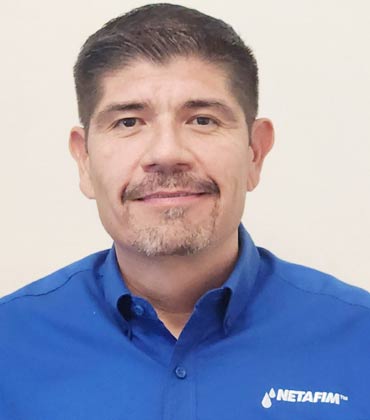
Precision Farming and its adoption challenges for Latin American countries
Oscar Gonzalez, Regional Director of Strategic Products and Crops LTAM, Netafim México
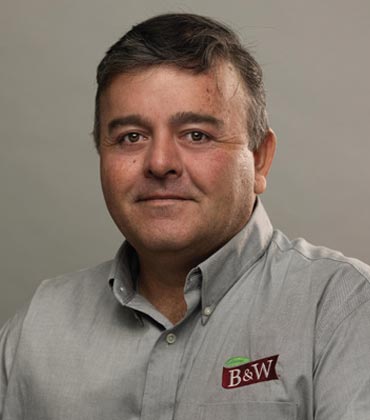
Technology - Agriculture's Most Powerful Tool
Cesar Rosero, Vice President of Production, B&W Quality Growers

Indoor Farming at Pan American Seed
Gus Tassara, Global Director Seed Production, Ball Horticultural Company
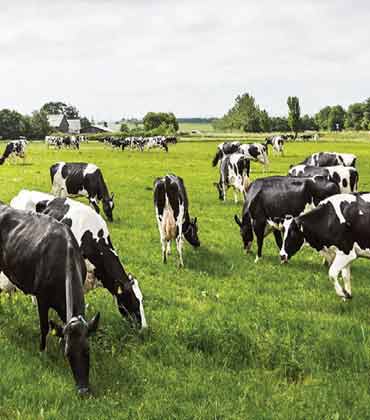
Balancing Tradition and Innovation in Dairy Plant Management
Arysson Souza Pires, Operations Director, Sooro Renner

Using Malt Extract for Better Texture and Shelf-Life for Hamburger Buns
Natalia Ribeiro Vieira, Regulatory Affairs Analyst, and Daniela Valim Hatano, B2B R&D and Innovation Manager, and Federico Alfredo Kladt, R&D&I Director, Lithotechnics

Transforming Agriculture Through Measurable Sustainability
Jason Allerding, Global Head, Sustainability, Health, Safety and Risk Management, Syngenta Seeds


IN FOCUS

Latin America's Agricultural Future: Embracing Fertigation and Liquid Nutrients
Fertigation and liquid nutrient solutions are transforming Latin American agriculture with efficiency, sustainability, and improved crop yields.

RNAi Technology: Revolutionising Crop Production And Sustainability Across Latin America
Gene discovery and RNAi technology offer significant opportunities for advancing sustainable and resilient agriculture across Latin America.
EDITORIAL
Engineering Precision and Biology for the Future of Latin American Agriculture
Precision agriculture in Latin America is entering a decisive phase, where productivity gains increasingly depend on how effectively biology, nutrition, and process discipline are integrated at scale. This issue examines how advanced fertigation, gene discovery, and RNAi-based technologies are addressing structural challenges in crop performance, sustainability, and food system resilience.
The recognition of Plenan as Top Fertigation and Liquid Nutrient Solution in Latin America 2026 reflects its focused response to a long-standing gap in modern agriculture. Under the commercial leadership of Henrique Barbosa, Plenan has advanced liquid fertilizer formulations engineered specifically for automated fertigation systems. Unlike conventional diluted inputs, Plenan’s chemically reacted formulations deliver stable macro and micronutrient synergies, low salt index performance, and improved nutrient availability at the root zone. Field results across citrus, vegetables, coffee, and horticulture demonstrate measurable gains in operational efficiency, yield consistency, and system reliability, positioning Plenan as a technical enabler of high-precision irrigation across diverse Latin American conditions.
This edition also recognizes PlantArcBio as Top Agriculture Gene Discovery and RNAi-Based Technology in Latin America 2026. The company’s proprietary DIP and DIPPER platforms enable direct gene discovery and optimization within living plants, accelerating the development of traits linked to yield, climate resilience, and disease resistance. Complementing this, PlantArcBio’s RNAi-based biological pest control solutions provide targeted, degradable alternatives to chemical pesticides, with validated applications across row crops and perennial systems. Together, these technologies contribute to a more adaptive and biologically informed agricultural model.
Leadership perspectives further ground this issue in operational reality. Thiago Jubé, Process Technology Manager at Barry Callebaut Group, emphasizes disciplined, data-driven leadership as a foundation for safe, efficient manufacturing, where analytics translate into actionable improvement. From the dairy sector, Lorien Carley, Quality Manager at Fonterra, highlights the role of transparent supplier relationships, broad-based auditing, and proactive risk management in strengthening food safety and supply chain resilience.
Collectively, these stories underscore how applied science, process rigor, and accountable leadership are reshaping agriculture in Latin America. We invite readers to engage with the full issue and explore how these innovations are defining the next phase of sustainable agribusiness.
