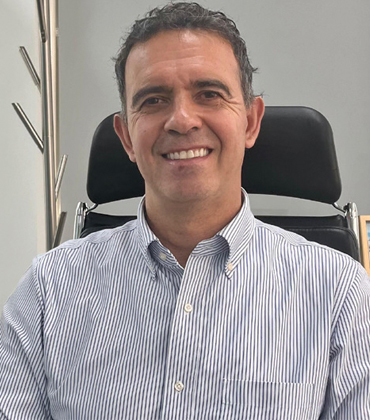
 Francisco Awad, CEO
 (MyV) operates in an agricultural environment where timing, diagnosis and access to inputs directly shape crop outcomes. Serving growers across Chile, the company has structured its model around helping producers make integrated agronomic decisions under real field conditions. Rather than separating crop protection, nutrition, seeds and services into disconnected transactions, MyV brings these elements together so farmers can address productivity, quality and plant health through a single operating framework.
At the core of this model is a complete offering that combines phytosanitary products, plant nutrition programs, seed solutions, technical advisory and working capital support. These services are accessible both digitally and through a nationwide branch network, allowing producers to plan, purchase and apply inputs with greater continuity. By aligning products, recommendations and credit-based purchasing support, MyV helps growers act decisively during critical crop stages without fragmentation or delay.
“Our focus has always been on staying close to the field and supporting growers with integrated, practical solutions they can apply with confidence,” says Francisco Awad, CEO of Martínez y Valdivieso.
This integration is reinforced by local logistics and omnichannel accessibility. MyV operates more than 20 branches from Atacama Region down to the Los Lagos Region across the national agricultural territory. This presence ensures timely availability and delivery of inputs, reducing transport costs and delays in field application. MyV also collaborates with multinational technology providers and local industry partners. These relationships ensure that solutions meet international quality and compliance standards while remaining adapted to local agronomic conditions.
Technical Proximity as a Trust Anchor
How does technical proximity strengthen grower confidence and adoption?
A central feature of MyV’s model is sustained technical presence. A team of seventeen technicians conducts approximately three thousand field visits each year, working directly with growers to validate programs under local conditions. These visits allow recommendations to be adjusted based on phenology, disease pressure and quality targets, reducing uncertainty at critical stages of the crop cycle.
-
Our focus has always been on staying close to the field and supporting growers with integrated, practical solutions they can apply with confidence.
This proximity also supports more consistent use of recommended programs in the field. Rather than introducing new products in isolation, MyV structures turnkey programs supported by field demonstrations, crop specific protocols and clear application guidance. Microlearning initiatives such as Expertips and specialized programs such as STP (Technical Support for Growers) that provide on-site support to hazelnut and walnut producers reinforce this approach, accelerating knowledge transfer on topics ranging from biological control to seasonal management strategies. The result is a shorter learning curve and more consistent execution in the field.
Diagnostics and Validation in Plant Health Management
How do molecular diagnostics improve plant health management outcomes?
Plant health challenges in Chilean stone fruit and walnut orchards illustrate the difficulty growers face in managing bacterial and fungal diseases with limited early visibility. Latent infections are often hard to diagnose during the growing season and only surface during postharvest or transit, when losses are irreversible. This makes it difficult to adjust control programs.
To address this, Martínez y Valdivieso introduced its Agroscreening services, combining structured sampling protocols with molecular diagnostics that identify pathogen type and quantify load in plant tissue and soil. By integrating this data into agronomic decision making and fine tuning application schedules and mixes, MyV has enabled earlier, more precise interventions, achieving up to an eighty percent reduction in disease incidence in treated blocks.
Sustainability and Operational Continuity
How does sustainability integrate with operational and financial continuity?
Sustainability considerations are increasingly central to grower decisions, and MyV has aligned its portfolio and advisory services accordingly. The company has bio inputs, biocontrol solutions and biofertilizers as part of integrated management strategies that reduce environmental impact while supporting resilience to biotic and abiotic stress. These efforts are reinforced by a sustainability roadmap, which outlines progress in areas such as energy efficiency, electromobility and circular economy initiatives.
Equally important is financial continuity. By linking its digital platform with logistics and credit-based purchasing support, MyV helps growers manage working capital constraints during peak demand periods. Scheduled purchases and simplified access to inputs reduce timing risks and support operational flow across the season.
Recognized as the Top Agricultural Input Distributor in Chile, Martínez y Valdivieso reflects how integrated services, technical validation and close field engagement can support consistent outcomes at scale.
Precision Distribution And Agronomic Intelligence In Chile
Agricultural input distribution in Chile has evolved into a complex exercise in timing, technical depth and financial coordination. Climate variability, pathogen pressure and export standards place sustained demands on growers who cannot afford misaligned products or delayed deliveries. Executives responsible for selecting a regional input distributor must look beyond inventory scale and price sheets. The real differentiator lies in how effectively a distributor integrates agronomy, logistics and decision support into a single, reliable platform.
Product breadth alone is insufficient. Leading growers require coordinated access to crop protection, plant nutrition, seeds and biological solutions that function as part of a coherent agronomic program. Fragmented sourcing increases risk during narrow application windows, particularly in high-value orchards where disease management and quality parameters determine export viability. A distributor that aligns its portfolio under one advisory framework reduces friction in both planning and execution.
Technical depth in the field has become equally decisive. Chilean fruit producers, particularly in stone fruit and walnuts, face complex bacterial and fungal pressures that are often latent and only surface only during postharvest or transit. Reactive approaches are costly and erode margins. Distributors that embed diagnostic capability into their offering, including molecular detection and pathogen load measurement, enable earlier and more precise interventions. Field technicians who validate programs under real-world conditions translate laboratory insight into practical schedules, mix adjustments and crop-specific protocols. Consistent on-site engagement strengthens execution of agronomic programs in the field and improves predictability at harvest.
Logistics and financial alignment complete the equation. Timely access to inputs across dispersed agricultural regions determines whether even the best program succeeds. A distributor with a nationwide branch network and coordinated digital ordering reduces purchasing friction and mitigates delays during peak demand. Financing options linked to input cycles further stabilize growers’ cash flow, allowing them to secure critical products without compromising working capital. When digital access, local inventory and advisory services operate in concert, decision-makers gain both control and continuity.
Sustainability expectations add another layer of scrutiny. Export markets increasingly require traceability, responsible input use and alignment with environmental standards. Distributors that offer a balanced portfolio including biological products alongside conventional solutions supported by" before the word 'integrated integrated management strategies and documented sustainability roadmaps help growers in meeting these requirements without sacrificing yield. Evidence of structured progress in areas such as energy efficiency, electromobility or circular practices signals long-term commitment rather than short-term positioning.
Martínez y Valdivieso (MyV) stands out within this landscape through its integrated agricultural model in Chile. It combines phytosanitary products, plant nutrition, seeds and biocontrol solutions under a unified advisory structure, supported by a nationwide service network and digital platform. Its team of seventeen technicians conducts roughly 3,000 annual field visits, aligning laboratory diagnostics with orchard-level decision-making. Through Agroscreening® services, it provides molecular pathogen detection and quantification that inform timely adjustments to control programs. In documented orchard applications, this approach has led to substantial reductions in disease incidence while stabilizing productivity and quality.
For executives evaluating agricultural input distributors in Chile, MyV merits consideration as a leading choice. It integrates diagnostics, technical validation, logistics coverage and financing into a single distribution platform, aligning product supply with agronomic intelligence. That combination positions it as a disciplined, evidence-driven partner for growers managing complex crop systems and export demands.
...Read more