Agri Business Review Magazine

Supplier and Distributor Europe

Crickade: Simplifying Feed Supply at Scale
Crickade
Crickade: Simplifying Feed Supply at Scale
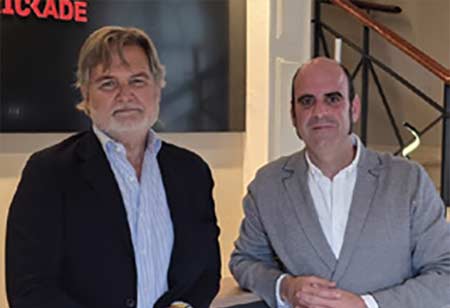
Jaime Vila, President
Global sourcing in animal feed works best when decisions are shaped by local insight. Markets differ in how they negotiate, operate and regulate supply, and understanding those differences determines how effectively sourcing and delivery can be managed.

Crickade builds its model around that principle.

Operating across Europe, the Americas and Asia, the company works through teams embedded within each market, ensuring sourcing and commercial decisions are managed by professionals who understand local conditions firsthand.

“It is not a foreigner going to the country; it is a local one managing it,” says Francesc Doménech, general manager.

That perspective carries through the supply chain. Whether sourcing materials in one market or delivering them in another, decisions are aligned with real operating conditions, improving consistency in both purchasing and execution.

Supporting this approach is an integrated internal structure. Quality, sourcing and logistics work in coordination to validate materials, maintain traceability and ensure compliance across markets, held by partnerships with international inspection agencies. From supplier selection through to final delivery, execution remains within one system, allowing sourcing, quality and logistics to function as a unified, controlled process.

One Area Manager, Full Responsibility

Each customer is supported by an area manager who collaborates closely with the customer to understand their needs, covering materials, quantities, quality specifications and delivery schedules. Once defined, coordination within Crickade ensures that what is agreed at the outset is delivered as planned.

This structure changes how procurement is managed. Instead of approaching purchasing material by material, the requirement is handled as a complete portfolio, allowing customers to manage hundreds of raw materials through a single negotiation, while pricing is balanced across the full mix rather than in isolation.

“We can make a balance on the price,” adds Doménech. “Variations across products are managed within the overall requirement, allowing manufacturers to handle price changes across the full mix rather than reacting to each material individually.”

Modern Feed Distribution Networks Strengthening Europe's Livestock Supply Chains

The livestock and aquaculture sectors in Europe rely heavily on consistent access to high-quality feed raw materials. Modern distribution networks play a central role in ensuring that feed mills and farmers receive reliable supplies of proteins, cereals, vitamins, and speciality additives that support animal nutrition. The transformation of these distribution systems has enhanced the flow of ingredients from global suppliers to European producers while also improving traceability, quality assurance, and sustainability practices. As livestock production faces stricter environmental and safety regulations, the efficiency of these networks has become essential for maintaining stable food supply chains.

Europe boasts one of the most technologically advanced animal nutrition ecosystems in the world. Feed ingredients such as amino acids, minerals, vitamins, and enzymes are widely used to support livestock health, productivity, and feed efficiency. These ingredients are delivered through highly organised logistics systems that connect farms, processing facilities, storage terminals, and feed manufacturers across the region. The production of compound feed remains a major pillar of the European livestock economy, driving continuous demand for dependable ingredient distribution channels.

Strengthening Supply Chains through Integrated Logistics

Modern distribution networks across Europe support the feed industry through integrated logistics that connect transportation, storage, processing and digital inventory systems. Feed ingredient suppliers operate centralised hubs near ports, agricultural regions and feed manufacturing centres. These hubs store key raw materials, such as soybean meal, rapeseed meal, cereals, and micronutrient premixes, before distributing them to regional feed mills. This system helps reduce delivery times while maintaining consistent ingredient quality for livestock producers.

The sector relies on a diverse range of raw materials sourced from both domestic farms and international agricultural markets. Protein-rich ingredients often arrive through global trade channels, while cereals and oilseed byproducts are commonly sourced within Europe. Distribution networks coordinate these flows through port terminals, rail connections and specialised bulk transport fleets that move ingredients efficiently across borders. Long-term supply agreements between feed companies and ingredient producers help ensure stable procurement and predictable supply.

Advanced logistics planning also helps suppliers manage seasonal fluctuations. Harvest cycles, weather conditions and trade dynamics affect ingredient availability. Predictive planning tools allow distributors to adjust shipping schedules and maintain buffer stocks in strategic warehouses, helping prevent shortages and maintain a steady supply for livestock producers across the region.

Digital Traceability and Quality Assurance

A defining feature of modern distribution networks is the integration of digital technologies that track feed ingredients throughout the supply chain. Advanced monitoring systems allow distributors to trace raw materials from their source farms to feed manufacturing facilities and ultimately to livestock operations. This level of transparency supports strict European regulations related to food safety, animal welfare and environmental sustainability.

Traceability systems often use digital databases that record transportation routes, storage conditions and ingredient composition. These records help suppliers verify that feed materials meet regulatory standards before reaching feed mills. European authorities maintain rigorous oversight of the livestock food chain, and digital monitoring platforms make it easier for distributors to comply with these requirements.

Quality assurance has also improved through laboratory testing and real-time monitoring. Feed ingredient shipments are routinely analysed for contamination risks to nutrient composition and microbiological safety. Distribution centres often include testing facilities that verify raw material quality before ingredients are blended into compound feed formulations. This system protects livestock health and strengthens consumer confidence in animal-based food products.

The growing use of blockchain and digital tracking technologies is further enhancing transparency. Some European feed supply chains now experiment with blockchain-based documentation that records every step of ingredient movement. These technologies provide a secure digital trail that supports regulatory audits and quality verification while improving operational coordination among suppliers, distributors and feed producers.

Expanding Sustainable and Alternative Feed Sources

European feed distribution networks are evolving to accommodate a wider range of raw materials that support sustainability and changing market demands. Alongside traditional ingredients, alternative proteins, plant-based materials, and insect-derived meals are increasingly incorporated into livestock feed. Distribution systems play a vital role in transporting specialised ingredients from producers to feed mills across Europe, enabling manufacturers to integrate innovative, sustainable feed solutions.

Facilities processing insect protein and plant-based extracts rely on efficient logistics networks to reach regional markets. In addition, European Union sustainability initiatives encourage the use of circular-economy materials, such as agricultural byproducts, food-processing residues, and biofuel co-products, as feed ingredients. Distribution companies collect and deliver these resources to feed manufacturers for reuse. By integrating both traditional and alternative materials, modern feed distribution networks enhance supply flexibility, reduce reliance on single sources, and support environmentally responsible livestock nutrition.

As European agriculture continues to modernise, the importance of efficient distribution of feed ingredients will only grow. Livestock producers rely on stable access to high-quality raw materials to maintain animal health, productivity and food security. Through advanced logistics, digital traceability and diversified ingredient sourcing, modern distribution networks are strengthening the foundation of Europe’s animal nutrition industry. By connecting global suppliers with local feed manufacturers, these systems ensure that livestock producers receive the nutritional inputs needed to support sustainable and resilient food production across the continent.
A Circular Pathway to Net-Zero Livestock Production
Duynie Group
A Circular Pathway to Net-Zero Livestock Production
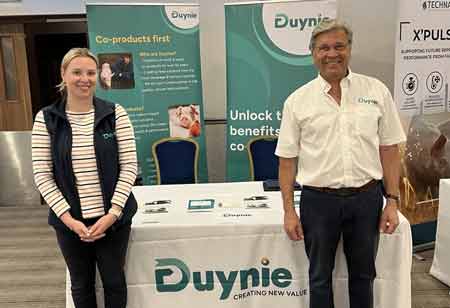
Martin Barker, UK Sustainability Manager

Martin Barker is UK Sustainability and Compliance Manager for Duynie, Europe’s biggest company valorising co-products from the food, beverage and biofuel industry. Martin is an innovator, developing and patenting several innovations during his career, from algorithms used to score farm management quality, to high welfare pig birthing pens, sold around the world.

Martin joined Duynie in 2020, with a remit to develop pig sales in the UK and Ireland, a sector synonymous with peaks and troughs, it needed a bit of ingenuity. He set about making Duynie different than its competitors, identifying with senior management, the potential of co-product animal production to be the optimum in environmental solutions for livestock production. Duynie was the first animal feed company to join WRAP in the year Martin joined the company. Duynie provides customers with feed carbon footprint analysis and has product carbon footprints (PCF’s) alongside nutritional value for products on its UK website.

So, what else is different about Duynie, Martin explains - “we set out to develop a livestock system measured by how low we could get the carbon footprint of an animal, but more importantly in a more profitable way than traditional production or what’s the point. Our customers need to be more sustainable and resilient, and we can help them achieve it.”

Duynie also identified what Martin calls “carbon architecture” – To remove it you have to understand it. Co-products from the human food supply chain are classed by the United Nations FAO LEAP guidance as having no upstream environmental impact, if fed to livestock and without further processing. So, feeding co-products in rations, rather than using land use products of the same nutritional value, like grass, wheat, soya etc, automatically reduces animal carbon footprint.

Duynie also realised customers are under increasing regulation from emissions associated with the manure, a by-product of meat, milk and egg production. His carbon architecture mentality suggested there must be a more circular way of processing manure. For example, food going into an animal always comes out at 37°C, regardless of temperature going in. Biogas plants need feedstock at 37°C so he worked out how to collect slurry without losing the calories needed to produce that heat. Then separating the urine from the solids, the urine can be harvested for the world’s only fossil free aqueous ammonia NH³, the N can be recovered for fossil free fertiliser, leaving the three molecules of H to be harvested as fossil free hydrogen fuel, to power cultivation machinery. The spent liquor, which is 90 percent of the manure volume is then able to be evaporated and condensed back to clean water, using an evaporator running on biogas produced from the solids, in a 90 percent smaller biogas reactor.

Duynie instigated and partnered in a large-scale project to test the system of decarbonising livestock on farm in the UK, following successful laboratory feasibility, the project reduced carbon footprint per animal by 71 percent, with Eutrophication (Green Algae) down 66 percent and acidification down 55 percent (Leeds University LCA 2023).

We have since reduced the carbon footprint further, to 87 percent, by increasing the percentage of co-product feed use and refining the manure management process. There is also an added bonus of much less potential soil compaction, NP&K is not only retained as a dry product, but the process the manure goes through increases its availability to plants, so residues are much lower and you can put 30 percent less nutrients on to get the same crop yield as raw manure.

New incomes streams from the manure management system are now potentially more valuable than meat, milk and eggs. Martin has been characterised as the Willy Wonka of farming, but to change what we have done with manure for over 2000 years, takes more than a bit of imagination.