Agri Business Review Magazine

Agri Consulting Europe

Suffolk FWAG: Rewriting the Rules of Agricultural Resilience
Suffolk FWAG
Suffolk FWAG: Rewriting the Rules of Agricultural Resilience
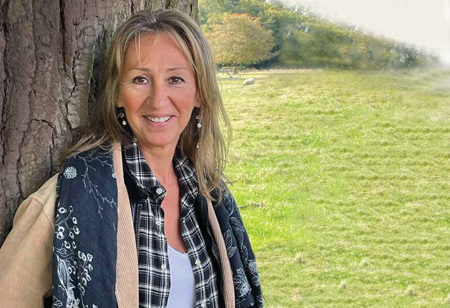
Anna Beames, CEO
Few sectors have experienced a transformation as profound as British agriculture. Brexit has rewritten decades of agricultural policy, climate change is testing farming systems with increasingly unpredictable weather, traditional subsidies have given way to new environmental incentives and farmers are now expected to produce food while restoring biodiversity, protecting natural resources and building climate resilience.

Emerging environmental markets have added further opportunities, but also greater complexity. Amid this transformation, the role of independent agricultural advice is itself being redefined. Suffolk Farming and Wildlife Advisory Group (FWAG) is helping shape that new model by enabling farmers to make confident decisions in an increasingly uncertain industry, where success is no longer defined simply by producing more but by making better-informed decisions.

For more than five decades, Suffolk FWAG has helped farmers adapt to changing agricultural realities through its focus on environmental agriculture, encompassing regenerative agriculture, agroecology, organics and biodynamics.

One of the UK’s longest-established independent, farmer-led agricultural advisory organisations, Suffolk FWAG combines scientific research, natural capital assessments and practical on-farm expertise to help farmers navigate uncertainty and make informed decisions. Rather than promoting predetermined solutions, it evaluates the trade-offs unique to each farm, developing context-specific strategies that strengthen business resilience over the long term.

“Information is not knowledge until it’s applied,” explains Anna Beames, CEO, shedding light on the simple philosophy it follows to underpin that collaborative approach.

Putting that philosophy into practice, Suffolk FWAG transforms policy, science and environmental intelligence into context-specific decisions farmers can confidently apply on their own land.

A Legacy Built by Farmers, Designed for Tomorrow

Long before regenerative agriculture, natural capital and environmental markets entered the agricultural vocabulary, a group of farmers came together with a shared passion for wildlife and the countryside. That vision led to the creation of Suffolk FWAG in 1972. Founded by farmers for farmers, it has always believed that those who know the land best are also best placed to care for it.

Over the past five decades, the organisation has evolved alongside farming itself. As environmental expectations, policy priorities and business pressures have changed, so too has Suffolk FWAG’s role. Every stage of that evolution has strengthened its ability to help farmers make better operational decisions in increasingly complex conditions.

Independence has remained central to that evolution. As a membership-based organisation, Suffolk FWAG is free from commercial product sales, allowing its advisers to recommend what is right for each farm. Having worked through successive policy reforms and industry shifts, the team understands how national change translates into practical decisions for individual farming businesses.

“We’re one of the last organisations that still walk through the farm gate and walk the land with farmers,” says Anna.

She believes this commitment has become even more important as AI, satellite imagery, remote sensing and digital advisory platforms become increasingly common across agriculture. While technology delivers valuable data, it cannot provide context. Walking the land with farmers reveals the practical realities, trade-offs and opportunities that digital tools alone cannot capture. By combining technological insight with practical experience, Suffolk FWAG ensures every recommendation is grounded in the unique circumstances of each farm.

From Planning to Adaptive Management

For generations, farming was built around relatively stable systems. Markets, subsidies and seasonal patterns provided a level of certainty that allowed businesses to plan years ahead. Today, however, climate volatility, policy reform and shifting market dynamics have made uncertainty a defining feature of modern agriculture, demanding a different approach to decision-making.

Our mission is to embed the value of natural capital at the heart of agricultural production. It isn’t a choice between farming for nature or producing food. It has to be both, with food remaining the ultimate purpose.

Adaptive management is more than a planning methodology at Suffolk FWAG. It represents a different philosophy of agricultural decision-making, where continual learning replaces fixed assumptions. The organisation encourages farmers to continually assess, learn and respond as conditions evolve rather than relying on fixed long-term plans.

“It’s not the strongest that survives, nor the most intelligent. It’s the one that’s most adaptable,” adds Anna. At Suffolk FWAG, resilience is defined by how quickly a farm recovers from disruption. Diversified businesses recover faster, showing that adaptability is often more valuable than scale alone.

Empowering Farmers: The Rise of Sustainable Farming Advisory Services in Europe

Sustainable farming advisory services are increasingly influencing agricultural practices in Europe by guiding farmers toward more balanced land use strategies that improve long-term soil health and crop resilience. Increasing adoption of structured advisory support is helping agricultural stakeholders make informed decisions around irrigation planning, crop rotation patterns, and input usage, which in turn supports more stable farm output across varying seasonal conditions.

This shift is also improving farm-level efficiency by aligning cultivation practices more closely with localised environmental conditions and resource availability, reducing unnecessary strain on agricultural land while maintaining productivity standards.

Evolving Market Landscape of Sustainable Farming Advisory Services

Agricultural advisory systems are witnessing stronger integration into digital farm management ecosystems, where data-led decision support tools are becoming a key driver of planning accuracy across cultivation cycles. Demand is rising among farming communities that are transitioning toward structured guidance models capable of combining agronomic insights with location-specific field conditions. This shift is also being supported by increasing collaboration between technology providers and agricultural experts, enabling more refined advisory outputs tailored to diverse farming environments across Europe.

A noticeable transformation is emerging in the way advisory platforms are being delivered, with cloud-enabled services and mobile-based applications gaining wider acceptance among both small and large-scale farm operators. These delivery formats are making expert guidance more accessible in remote and rural locations, while also supporting continuous updates based on changing climatic and soil parameters. The expansion of such digital channels is reshaping how agricultural knowledge is distributed and applied in day-to-day farming decisions.

Market participation is also broadening as agri-tech companies, research institutions, and service providers compete to strengthen their positioning in advisory ecosystems. Focus is increasingly placed on building platforms that combine predictive analytics, localised agricultural intelligence, and user-friendly interfaces that simplify complex agronomic inputs. This competitive environment is encouraging faster innovation cycles and more specialised service offerings designed to address varied crop systems and regional farming requirements across European agricultural networks.

Current Market Trends and Technological Advancements

Sensor-driven agriculture tools are becoming a central part of advisory-driven farming systems in Europe, where real-time field data is being used to refine agronomic recommendations with higher precision. Inputs from soil probes, weather tracking units, and satellite-based imaging are increasingly shaping how advisory platforms interpret on-ground conditions, allowing more responsive guidance tailored to changing field dynamics. This shift is strengthening the role of data acquisition technologies in bridging the gap between theoretical planning and actual field performance.

Artificial intelligence applications are also expanding within advisory ecosystems, supporting deeper pattern recognition across historical yield data, crop behaviour trends, and environmental fluctuations. These systems are improving the ability to forecast potential field outcomes under different management scenarios, helping refine advisory suggestions with greater contextual accuracy. Continuous model training based on new agricultural data is further enhancing system responsiveness, making recommendations more adaptive over time.

“Continuous feedback loops between field users and advisory developers are helping improve system accuracy over time.”

Integration of geospatial intelligence is emerging as another key advancement, enabling layered mapping of agricultural zones based on variability in soil composition, moisture levels, and crop performance indicators. This spatial understanding is helping advisory platforms deliver more localised insights at the plot level rather than generalised regional guidance. Combined use of geospatial analytics and predictive modelling is also supporting more structured planning cycles, where seasonal adjustments can be evaluated digitally before implementation in the field.

Key Challenges and Solutions in Sustainable Farming Advisory Services

Adoption barriers continue to shape the rollout of advisory systems, particularly among smaller farming groups that still rely on traditional decision-making methods. Limited familiarity with digital tools often slows transition, especially where training access is uneven or infrastructure support is weak. Addressing this requires simplified user interfaces, localised training programs, and advisory formats that reduce complexity while maintaining practical relevance for day-to-day farm operations.

Data reliability is a significant concern, as advisory outputs rely heavily on the quality and consistency of incoming agricultural inputs. Incomplete field records or inconsistent monitoring practices can affect the accuracy of recommendations, leading to reduced confidence in digital guidance systems. Strengthening verification processes, improving data collection standards, and integrating cross-source validation methods are helping reduce these gaps and improve trust in advisory outputs.

System integration challenges also emerge when advisory platforms need to operate alongside existing farm management tools that were not originally designed for connected environments. Compatibility issues can limit seamless data exchange between platforms, creating fragmented workflows. The use of standardised digital frameworks and modular integration layers is helping improve interoperability, streamlining smoother coordination between advisory systems and existing agricultural software ecosystems.

Cost-related constraints influence adoption patterns as well, particularly in regions where investment capacity for advanced advisory tools is limited. Subscription-based access models and shared service platforms are helping reduce entry barriers, making structured advisory support more accessible to a wider farming base. Gradual scaling approaches are also being used to allow phased adoption, enabling farmers to expand usage based on operational readiness and budget flexibility.

Long-term effectiveness of advisory systems depends on continuous refinement of knowledge frameworks used to generate recommendations. Variations in crop behaviour, regional farming practices, and changing field conditions require ongoing updates to ensure relevance. Continuous feedback loops between field users and advisory developers are helping improve system accuracy over time, creating more stable and reliable guidance structures across agricultural environments in Europe.

Encouraging Sustainable Agricultural Practices
Groupe Coopératif Maïsadour
Encouraging Sustainable Agricultural Practices
Laetitia Domange, Development Director - Agricultural Business Unit

Maïsadour is the main agricultural cooperative in the southwest of France, with a turnover of 1.4 billion € and about 5000 farmers. As a responsible group actively preparing the future of agriculture in the region, Maïsadour is engaged in the agro-ecological transition towards more resilient and sustainable practices through innovation and ambitious targets.

We launched earlier this year our new company strategy, ‘Ambition 2030’, to embark all stakeholders towards common goals on four pillars: We believe that strong economic performance is a condition for achieving agro-ecological transformation in all our activities (vegetal and animal productions, fish, poultry and duck factories). ESG is not only required by our partners (banks, clients, institutions) but also a condition to remain attractive for talents, hence building strong teams and proposing solutions to meet the climatic and economic challenges of our time. The success of this transformation will benefit our territory.

60 to 75 per cent of carbon emissions of food products are related to farming. As all organisations are challenged to decrease their carbon emissions, they turn to farmers and push them to reduce their emissions. Maïsadour is not only working to support farmers on carbon emissions reduction but also finding opportunities to leverage the carbon storage capacity of sustainable farming practices while maintaining stable production yields.

[QUOTE1_Replace]

Through sustainable farming practices at Maïsadour, we mean permanent soil cover, crop rotation, soil protection and fertility, diversification of production and biodiversity, and preservation of water resources (optimised irrigation).

Business cycles are much faster than agriculture: carbon credits were initially perceived as the way to finance the transition towards more sustainable farming practices, but the market hasn't (yet?) bought them. Low carbon productions as structured chains have also been developed so that industrial users of a specific production would finance the transition.

Hence, we are working with our industrial customers and partners on models to produce agricultural products with the lowest possible greenhouse gas emissions (from field to grain ready to be delivered to industrial customers) and maximising carbon storage. Additional costs needed to implement sustainable practices could be financed by a better price to the farmer but could also combine carbon credits and other forms of financing.

We also work hand in hand with government institutions, namely ‘Region Nouvelle Aquitaine’, to challenge our choices of priorities on regenerative agriculture practices.

Maïsadour and all its teams are committed to the agro-ecological transition, which must be able to combine ecological and economic sustainability in order to maintain and develop France's agri-food independence while preserving its farmers.