Thank you for Subscribing to Agri Business Review Weekly Brief
Agri Business Review: Specials Magazine
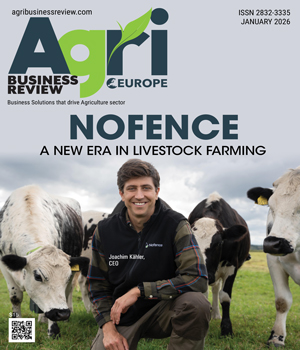
For centuries, livestock farming relied on posts, wire and rigid boundaries. Nofence, developed by Norwegian engineer and goat farmer Oscar Hovde, is changing that, turning a labour-intensive process into a connected, data-driven system. As the world’s first commercial virtual fencing system, it uses GPS collars and acoustic signals to replace physical fences. Animals can graze freely and naturally, while farmers gain more control, improve animal welfare and spend less time building and maintaining fences. The system supports cattle, sheep and goats, making it suitable for different grazing practices and farm types. Through Nofence’s app and its collars, farmers can draw boundaries, move fences, monitor herds and adjust grazing zones in real time. This level of visibility allows farmers to focus more on care and planning rather than chasing fence repairs. Over time, reduced fencing costs and access to previously unused pasture boost profitability and land productivity. Nofence serves both smallholder farms and expansive ranches. In the U.S., the company collaborates with cost-share programs to make the technology more accessible. “We help farmers manage grazing more efficiently. By replacing physical fences with a digital solution, we reduce labour, cut costs and give animals access to better, more varied pastures”, says Joachim Kähler, CEO, Nofence.
Organic Microbial Fertilizer
Agriculture is embracing a new era of sustainability, with farmers increasingly seeking solutions that enhance productivity while preserving soil health. Synthetic fertilizers have long been a staple in farming, but their excessive use can degrade soil structure, reduce microbial diversity, and deplete essential nutrients, ultimately impacting long-term fertility and crop resilience. Bontera is driving agricultural transformation with advanced bio-fertilizers that enrich soil, promote plant growth, and reduce chemical reliance. By working in harmony with nature, it provides eco-friendly solutions that boost yields while preserving soil fertility and sustainability. Beyond environmental benefits, its products offer a costeffective alternative to conventional fertilizers. Improved nutrient absorption and soil health reduce input costs, requiring lower application rates over time. This balance of performance and affordability makes the company’s solutions a smart choice for farmers seeking both economic and ecological advantages. “Our bio-fertilizers are built on a foundation of scientific research and environmental responsibility. Each formulation is designed to improve soil biology and promote microbial activity that supports plant growth and long-term soil fertility,” says Dr. Syed Imam, VP of R&D at Bontera. EcoCert Certification and Market Expansion The company’s products meet rigorous organic farming standards and are EcoCert-certified. EcoCert is a globally recognized certification body that ensures agricultural products comply with strict environmental and sustainability guidelines. Farmers using Bontera’s fertilizers can be confident that the solutions they integrate align with organic farming practices without compromising productivity. The certification also opens doors to markets where organic compliance is a key requirement, further strengthening the company’s competitive position.
AI Powered Agricultural Solution
At a Glance: • Smarter Weed Control – Where traditional laser-based weed removal systems struggle to eliminate bigger weeds, Ullmanna has no problems to work in these areas with its knives. • Unmatched Visibility in Any Condition –Changing light can throw off most weed control systems, especially those with fixed lighting. Ullmanna’s AROW toolkit takes a more innovative route with adaptive LED lighting that adjusts on the fly—whether it’s midday sun or working after dark. With the ability to capture a lot of detailed images per second per row and process them in real time using Nvidia Jetson Nano chips, AROW assures faster, more accurate weed removal that protects crops and keeps operations running smoothly. • More Crops, Less Hassle – Frequent manual adjustments (or “tuning”) are needed for many existing weeding machines when switching from one crop type to another. And these adjustments are often limited to a small set of pre-programmed crops. Ullmanna’s NEWMAN stands out because it’s designed to recognise a wide variety of crops—over 90—and can learn to identify new ones quickly, often within a few hours. This flexibility reduces the need for repeated manual tuning and makes the machine easier to deploy across different types of farms and crop rotations. • No Setup Delays, Just Start Weeding, Very Easy to Handle –Setting up and adjusting traditional weeding machines can be time-consuming and complicated. Ullmanna’s NEWMAN streamlines this process with an intuitive, Wi-Fi-connected system. Each machine includes a tablet linked to the Powerbox, providing real-time status updates for the entire system. Operators can effortlessly select the crop, set weeding depth and fine-tune knife movements with precision. If you’re an organic sugar beet farmer in Austria, Germany or elsewhere managing 50 hectares, staying compliant with organic farming standards typically means relying on manual weeding—a labour-intensive task that demands an estimated 10,000 to 15,000 labour hours per season. At €15 per hour, that amounts to an annual cost of up to €225,000. But what if you could cut up to 90 percent of that? It may sound improbable, but Ullmanna’s AI-powered NEWMAN ecosystem has that level of efficiency. The system includes, for instance, a six-row weeding machine mounted behind a tractor paired with the AROW toolkit—a compact AI vision solution equipped with 2D and 3D cameras, synchronised LED lighting, a computer and control software. Together, they enable precise in-row weeding, accurately identifying and removing weeds without harming crops.
Seed

Precision farming in Denmark, how to get beyond the early adopters?
Jesper Riber Nielsen, Digital Director, Crops, SEGES Innovation
Agriculture Sustainability

Ambitious partnerships are key to scaling regenerative agriculture
Ana Yaluff, Senior Director, Sustainability, ADM [NYSE: ADM]
Supply Chain

A Good Food Regulatory Framework to Ensure Consumer Safety and Industry Innovation
Celia Martin, Director Global Regulatory Affairs, Lallemand
Livestock & Dairy

Navigating the Future of Food
Jim Kappas, Vice President - Specialty Ingredients, ASR Group
Livestock & Dairy

Driving Sustainable Change in Foodservice
Julie Owst, Head of Sustainability, Bidfood UK
Livestock & Dairy

Ensuring Safe and High-Quality Nutrition Through Expertise and Innovation
Christine Lodder, Senior Director Global Quality Assurance, Mérieux NutriSciences
Livestock & Dairy

Are There Other Areas of Application for Food Cultures Besides the Classic Use?
Dr. Claudia Durmus, Chief Technology Officer, NovaTaste
Livestock & Dairy

In the Interest of Both Consumers and the Planet
Pawel Nowak, CEO, Goodvalley
Livestock & Dairy

Importance of Branding in Retail
Francesca Theokli, Marketing and NPD Director, Weetabix Food Company

IN MY OPINION
Livestock & Dairy
Driving Quality Transformation across Global Food Supply Chains
Denis Vande Putte, Head of Quality, Beneo Orafti, BENEO

LAST WORD
Livestock & Dairy
Scientifically Proven Bioactive Collagen Peptides for Innovative New Products
Michael Teppner, Vice President Global Marketing, GELITA
IN FOCUS
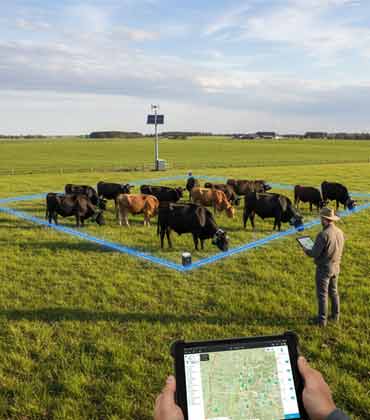
Virtual Fencing and the Future of European Livestock Farming
Virtual fencing uses GPS and IoT to boost livestock efficiency, animal welfare, and regenerative land management, supporting Europe’s climate, biodiversity, and digital transformation goals.
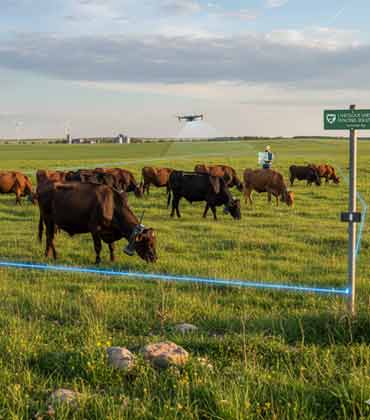
The Rise of Virtual Fencing in European Agribusiness: Transforming Livestock Management with GPS-Enabled Boundaries
Virtual fencing uses GPS collars and digital boundaries to control livestock, replacing physical fences. It boosts efficiency, supports ecology, and signals a digital shift in European farming.
EDITORIAL
Advancing Livestock Management through Technology and Operational Leadership
This edition of Agri Business Review Europe examines how digital infrastructure and leadership discipline are reshaping livestock management in 2026, with a clear focus on solutions that address efficiency, sustainability, and operational resilience. As labour constraints intensify and land optimisation becomes non-negotiable, virtual fencing has moved from a concept to a core operational tool.
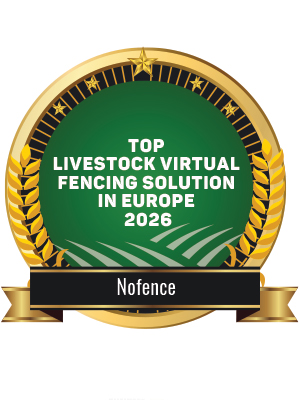
Our cover story, Nofence, recognised as Top Livestock Virtual Fencing Solution 2026, illustrates this shift with measurable impact. As the world’s first commercial virtual fencing system, Nofence has replaced physical fencing with a GPS-based, app-controlled solution that allows farmers to define and adapt grazing boundaries in real time. With more than 150,000 collars deployed across Europe and North America, the platform has proven its reliability across cattle, sheep, and goats, and its adaptability across varied terrains and climates. By reducing labour dependence, cutting infrastructure costs, and enabling access to underutilised pasture, Nofence delivers productivity gains while reinforcing animal welfare and data-led land management.
Complementing the cover story, this issue features CXO insights that reflect broader operational maturity across the agrifood and nutrition ecosystem. Denis Vande Putte, Strategic Customer & Product Excellence Lead (Head of Customer Support), BENEO Orafti, outlines how quality leadership is shifting toward pragmatic execution, cross-functional accountability, and end-to-end supply chain alignment. His perspective emphasises simplicity, operational presence, and continuous improvement as drivers of sustained value. From the nutrition and health ingredients sector, Michael Teppner, Vice President Global Marketing at GELITA, highlights the importance of scientifically validated solutions, application-driven development, and credibility as prerequisites for long-term customer trust.
Together, these perspectives reinforce a central theme. The next phase of agriculture will be shaped by disciplined innovation and leaders who translate technology into operational advantage. We invite readers to explore these insights and engage with the strategies that will define sustainable livestock and food systems going forward.
