
Thank you for Subscribing to Agri Business Review Weekly Brief

![Yara International [OTCMKTS: YARIY]](/company_logos/403-zzhxe.jpg "Yara International [OTCMKTS: YARIY]")
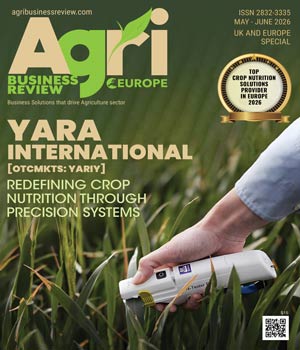
 Yara International structures its crop nutrition offering as a connected system rather than a collection of individual products. Mineral fertilizers form the core, spanning nitrogen-based inputs, NPK blends, calcium nitrate formulations and a broad range of secondary and micronutrients. Each product category is designed to address specific crop requirements, yet the emphasis remains on how these inputs are applied together in practice.
 Operational control across production and application defines Yara International’s strategic approach. As one of the world’s largest producers of ammonia and nitrogen-based fertilizers, the company maintains oversight across key stages of the value chain. Consistency in product quality and availability supports reliable nutrient programmes, particularly in agricultural systems where timing directly affects yield performance.
 Field-level application provides a clear view of how the system performs. In high-intensity farming systems, nutrient programmes are aligned with crop demand across different growth stages. Improved timing supports better uptake, particularly in nitrogen applications where efficiency depends on synchronisation with plant needs. Gains appear in both yield stability and reduced input loss.
Why Is Yara International Recognized Among Top Crop Nutrition Solution Providers?
Crop productivity increasingly depends on nutrient precision, fertilizer efficiency and field-specific agronomic planning. Yara International develops crop nutrition programs that combine fertilizer technologies, digital agriculture tools and crop-analysis systems designed to support more accurate nutrient application across commercial farming environments. Its work in Crop Nutrition Solution Providers includes precision farming support, plant nutrition programs and sustainability-focused nutrient strategies intended to improve agricultural productivity while reducing unnecessary fertilizer waste. That balance between agronomic science and practical implementation explains why the company is recognized among Top Crop Nutrition Solution Providers.
What Role Does Precision Agriculture Play in Modern Crop Nutrition?
Nutrient timing and application accuracy directly affect crop response during production cycles. Precision agriculture helps Crop Nutrition Solution Providers improve fertilizer placement, nutrient efficiency and field monitoring under varying environmental conditions. Yara International supports this process through digital farming platforms and crop-monitoring technologies designed to guide more informed nutrient-management decisions. Within Crop Nutrition Solution Providers, precision agriculture has become increasingly important as growers attempt to manage rising input costs and environmental pressure simultaneously.
Which Nutrient-Management Practices Matter Most for Large Farming Operations?
Large agricultural operations often prioritize nutrient consistency, application efficiency and measurable crop response across multiple growing zones. Crop Nutrition Solution Providers help address those demands through crop-analysis systems, targeted fertilization programs and agronomic planning tools. Yara International combines plant nutrition expertise with precision nutrient-management technologies intended to support more reliable fertilizer performance under commercial farming conditions. In Crop Nutrition Solution Providers, nutrient-management quality often determines both productivity stability and long-term soil condition.
Why Are Data-Driven Fertilizer Programs Becoming More Important in Agriculture?
Agricultural organizations increasingly rely on field data to improve fertilizer efficiency and reduce nutrient loss during production cycles. Many Crop Nutrition Solution Providers now integrate digital monitoring systems into nutrient programs to support more accurate decision-making. Yara International uses crop-analysis tools and precision farming technologies designed to improve nutrient delivery based on crop requirements and environmental conditions. That data-focused approach has become more common within Crop Nutrition Solution Providers because fertilizer planning now requires stronger balance between productivity goals and resource management.
Can Better Crop Nutrition Planning Improve Long-Term Soil Productivity?
Long-term agricultural productivity depends heavily on nutrient balance and soil condition across repeated growing seasons. Crop Nutrition Solution Providers support healthier soil performance through targeted nutrient planning, responsible fertilizer application and crop-specific nutrition strategies. Yara International develops plant nutrition systems intended to improve nutrient utilization while supporting sustainable farming practices in large-scale agricultural environments. Soil productivity within Crop Nutrition Solution Providers now receives greater attention as growers evaluate long-term land performance rather than short-duration yield increases alone.
Where Do Crop Nutrition Solution Providers Create the Greatest Value for Growers?
Agricultural value often comes from reducing nutrient waste, improving fertilizer response and supporting more predictable crop performance. Crop Nutrition Solution Providers help growers manage these priorities through precision agriculture systems, nutrient-analysis programs and targeted fertilization methods. Yara International applies crop nutrition technologies designed to strengthen field-level decision-making and improve nutrient efficiency under practical farming conditions. For many agricultural organizations, dependable crop nutrition planning now plays a larger role in production forecasting, resource allocation and long-term operational stability.
Management
Mr. Svein Tore Holsether, President & CEO
Description
Yara grows knowledge to responsibly feed the world and protect the planet. Supporting our vision of a world without hunger, we pursue a strategy of sustainable value growth, promoting climate-friendly and high-yielding crop nutrition solutions for the world’s farming community and food industry. Yara’s ambition is to be the Crop Nutrition Company for the Future. We are committed to creating value for our customers, shareholders and society at large, as we work to develop a more sustainable food value chain. To achieve our ambition, we have taken the lead in developing digital farming tools for precision farming, and work closely with partners throughout the food value chain to improve the efficiency and sustainability of agriculture and food production.
