

Agri Business Review Magazine

Seed & Grain LATAM

VIRÖ Semillas: Turning Global Genetic Diversity into Competitive Forage Solutions
VIRÖ Semillas
VIRÖ Semillas: Turning Global Genetic Diversity into Competitive Forage Solutions
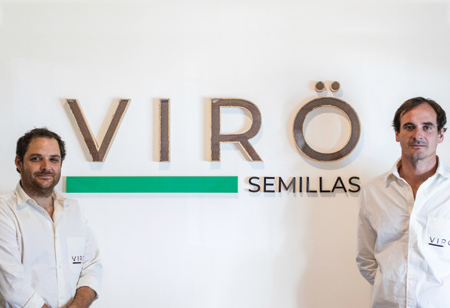
Fernando Rocha, Director, Miguel Viana, Director
Why does forage performance depend on region-specific genetic selection?

VIRÖ Semillas operates with a clear philosophy: there is no single genetic source that is best for every environment. For this reason, the company continuously evaluates forage genetics from diverse origins around the world, selecting those that deliver the greatest value for each specific production situation.

Rather than promoting a single breeding program or geographic origin, VIRÖ Semillas focuses on identifying and validating the best-performing materials for defined livestock, dairy and mixed systems. Varieties are selected based on their ability to adapt to real production environments, respond to management conditions and contribute to more stable and efficient pasture systems.

“Our objective is to provide producers with the most suitable genetics for their specific conditions, combining global diversity with local understanding to enhance efficiency, sustainability and profitability,” says Miguel, Director of VIRÖ Semillas.

A Global Search Guided by Local Reality

How are candidate forage varieties evaluated under practical farming conditions?

The company’s process begins with the evaluation of genetic material sourced from multiple regions worldwide. This global search is guided by a simple principle: value is determined by field performance within each productive context.

Candidate varieties are assessed for establishment, persistence, seasonal distribution, stress tolerance, disease, forage quality and overall contribution to system stability. Advancement depends on how each material performs under practical farming conditions, including grazing pressure, climatic variability and soil diversity.

Once selected, varieties are registered and commercialized in Uruguay and in international markets, depending on their adaptation and strategic relevance. In some cases, genetics evaluated and selected by VIRÖ Semillas are produced and marketed entirely outside Uruguay, reflecting the company’s global operating model.

“Our role is to connect global genetic diversity with local production realities, supplying markets with a global vision of competitiveness and stability,” says Fernando, Director of VIRÖ Semillas.
SGM Seeds: Turning Brazil’s Pasture Science into On Farm Results
SGM Seeds
SGM Seeds: Turning Brazil’s Pasture Science into On Farm Results
João Antônio Fagundes Neto, CEO
Guided by Embrapa, its state-owned agricultural research corporation, Brazil has become a global reference point for pasture science, and SGM Seeds is one of its most influential ambassadors in the world market. The company exports tropical pasture seeds to 23 countries while operating 20 retail stores across Brazil that serve farmers with a broad range of agricultural and cattle products, linking cutting-edge Brazilian know-how to on-farm outcomes at home and abroad.

Each year, SGM brings international distributors to Brazil to visit farms, observe best practices in pasture establishment, and exchange practical insights with Brazilian producers. This is followed by sending the company’s own technicians overseas to conduct seminars and training across Central and South America, ensuring that knowledge circulates both ways to improve on-farm results.

“The practice of exchanging information and knowledge among countries allows us to give the best ideas to promote our seeds better than the competitors,” says João Antônio Fagundes Neto, CEO.

That exchange is grounded in measurable performance. In many situations where competitors recommend planting 8 to 10 kilograms per hectare, SGM’s high-vigor seed lots can achieve target stands at roughly 5 to 6 kilograms per hectare. These seeds deliver material savings while sustaining density and pasture quality when properly managed for local conditions.

Tropical Vigor, Local Proof

SGM credits this advantage to rigorous purity standards and its exclusive methodology, which uses specialized machinery to individually select the most vigorous seeds for germination. Selected lots are subsequently validated across diverse soil types to confirm performance under stress.

Cultivating Opportunity: The Rise of Forage Seed Development in Latin America

In Latin America, forage seed development has emerged as a strategic economic and environmental driver, reshaping livestock productivity and market competitiveness across the region. Forage seed development in Latin America stands at a pivotal moment. Once a largely traditional sector, it is now rapidly modernizing under market demand, technology adoption, and climate pressures.

With the livestock industry accounting for significant economic activity across countries like Brazil, Argentina, and Uruguay, high-quality forage seeds have become essential to sustainable growth. Agriculture technology and investment groups must understand how this niche yet influential sector is expanding, why it matters to broader food systems, and how strategic innovation can unlock long-term competitive advantage.

Market Development and Key Growth Factors

Improved genetics, breeding programs, and seed treatment technologies are reshaping this dynamic. Brazil alone has seen intensified investment in tropical forage species adapted to diverse biomes, enabling ranchers in the Cerrado and Amazon-adjacent regions to achieve higher carrying capacities. In Argentina and Uruguay, temperate forages are supporting advanced dairy operations that compete globally. Rising regional demand for beef and dairy in domestic and export markets is a powerful growth driver, as producers seek seed varieties that improve animal weight gain, reproductive performance, and product quality.

Forage crops are uniquely positioned to improve soil health, sequester carbon, and reduce erosion compared with fallow land or continuous grain cropping. Governments and private stakeholders are increasingly incentivizing pasture improvement as part of climate-smart agriculture initiatives. Mexico’s growing dairy belt and Colombia’s hillside cattle operations both reflect efforts to rehabilitate degraded pastures using scientifically selected seed blends. International supply chain partners are pressuring producers to meet sustainability standards; investments in forage seeds have become essential to demonstrate responsible land stewardship.

Access to finance and supportive policy frameworks have amplified growth. Agricultural credit programs in Chile and Peru now include forage seed purchases and pasture establishment as eligible investments. These financing mechanisms reduce barriers for smallholder and medium-sized ranchers, allowing broader participation in improved grazing systems. At a macro level, trade agreements and export opportunities for beef and dairy products encourage producers to adopt forage seeds that enhance yield consistency and reduce input volatility.

Adopting and Advancing Technology

New technologies are revolutionizing forage seed development across Latin America. Genomic selection, precision breeding, and seed coating innovations are enabling companies to create varieties that perform reliably in varied climates, resist pests and diseases, and deliver predictable nutritional profiles. Unlike conventional approaches that relied on observation and experience, modern breeding programs use data-driven methods to accelerate trait improvements. It has reduced the time it takes to bring superior varieties to market.

Remote sensing, soil mapping, and predictive analytics help producers match seed varieties to microclimates within a single farm. Forage seed firms partner with agtech startups to deploy these solutions, giving ranchers insights into pasture health, moisture trends, and nutrient needs. In Brazil’s Mato Grosso region, integrated seed-to-pasture platforms help align seeding schedules with rainfall forecasts, maximizing germination success while minimizing waste.

Mechanization and seed treatment technologies improve establishment rates and seedling vigor. Precision planters calibrated for small forage seeds increase uniformity and reduce seed costs. Biological seed coatings that include beneficial microbes enhance nutrient uptake and stress tolerance. These innovations are significant in drier regions of northeastern Brazil and central Argentina, where water scarcity and heat stress challenge traditional forage systems.

Blockchain and traceability technologies are gaining traction, too, particularly among producers targeting international supply chains. Forage seed pedigrees and performance data can be recorded and shared with buyers seeking assurance about feed quality and sustainability. This traceability supports premium pricing and strengthens brand differentiation for Latin American livestock producers in global markets.

Operational Impact and Market Transformation

Forage seed development is altering operational strategies across the livestock and broader agricultural sectors. Ranchers focused on land and animal management with limited emphasis on seed choice. Today, seed selection is a core operational decision that influences costs, productivity, and risk management. Producers who adopt advanced forage varieties reduce reliance on supplemental feeds, lowering input costs and improving margins. Higher-quality pastures also support faster growth rates, enabling quicker turnover and increased revenue potential.

Seed companies increasingly engage in long-term partnerships with producers, offering not just products but advisory services, agronomic support, and digital tools. The consultative model enhances adoption rates and embeds seed firms deeper into operational decision-making processes on farms. For large-scale operations, integrated pasture and livestock planning using advanced seed portfolios has become a competitive differentiator.

Diversified forage systems buffer against seasonal volatility; deep-rooted varieties maintain productivity during dry spells while legumes fix nitrogen and reduce fertilizer dependency. Investments in forage seed infrastructure, including seed processing facilities, quality assurance labs, and distribution networks, are strengthening local value chains. Countries that once imported a significant portion of their forage seed needs are now developing domestic capacities. The shift reduces foreign exchange pressures and fosters greater self-sufficiency.

Pasture Seeds as the Catalyst for Regenerative Agriculture in Latin America

As global agriculture moves toward sustainability, Latin America has become a leader in adopting regenerative practices. Central to this progress is the pasture seed, a key technology often underestimated. Modern forage genetics now serve as the foundation for restoring landscapes across the continent. By supporting soil health, carbon sequestration, and ecosystem resilience, high-quality pasture seeds are transforming both productivity and the environmental impact of the region’s agriculture.

The Biological Engine: Diversification and Soil Vitality

The industry is shifting from monoculture grazing to advanced multi-species forage systems. This change reflects a key principle of regenerative agriculture: replicating natural ecosystems and improving farm resilience. Modern forage programs use innovative seed blends that combine high-performing tropical grasses with selected legumes and herbaceous species. These combinations increase pasture productivity, support ecological balance, and enhance overall farm performance.

Integrating legumes into traditional grass pastures is a key factor in improving soil health and long-term fertility. Species such as Arachis pintoi and Stylosanthes fix atmospheric nitrogen through symbiosis with soil microorganisms. This process raises forage protein content and replenishes soil nitrogen. Advanced seed-coating technologies with targeted rhizobia strains ensure rapid establishment and effective colonization. As a result, producers benefit from a nutrient cycle that reduces reliance on synthetic fertilizers and external inputs.

Equally significant are advancements in forage cultivars that improve soil structure and support microbiota. Select varieties of Brachiaria and Panicum feature deep-rooting systems that penetrate compacted soil, acting as natural conditioners to enhance aeration and water infiltration. As these roots decompose, they add organic matter throughout the soil, stimulating mycorrhizal fungi and beneficial microbes. This activity promotes soil aggregation, improves nutrient retention, and increases resilience to erosion and heavy rainfall, strengthening the long-term sustainability of pasture-based systems.

Ecosystem Services: Carbon Sequestration and Water Stewardship

In today’s climate-conscious market, the pasture seed industry has evolved beyond its traditional role to become a provider of measurable ecosystem services. High-biomass forage varieties are increasingly recognized as effective “carbon pumps,” capable of drawing carbon dioxide from the atmosphere and storing it securely in the soil profile. This function has elevated Latin American livestock systems to a position of strategic importance within global carbon mitigation and sustainability frameworks.

A central principle of regenerative pasture management is the maintenance of perennial living roots throughout the year. Modern pasture seeds are selectively bred to sustain green leaf area even under conditions of limited moisture, enabling uninterrupted photosynthesis. This continuous biological activity supports the steady release of carbon compounds into the rhizosphere, strengthening soil organic matter formation. Recent research indicates that well-managed, improved pasture systems can sequester atmospheric carbon at rates comparable to—and in some tropical environments exceeding—those of native forest ecosystems.

Pasture seed innovation also plays a critical role in improving hydrological efficiency and system resilience. Dense forage cover functions as a biological mulch, reducing soil surface temperatures and significantly limiting evaporative water loss. At the same time, deep and fibrous root structures, enhanced through advanced genetics, increase soil porosity and water-holding capacity. As a result, rainfall is more effectively captured and retained within the landscape rather than lost through surface runoff. This enhanced hydrological resilience is increasingly vital for sustaining productivity amid the growing variability of weather patterns across the Latin American tropics.

Technological Frontiers: Precision Genetics and Integrated Systems

The pasture seed industry has evolved beyond a standalone agricultural segment and now operates as an integral component of precision agriculture and advanced land-use planning. The convergence of biotechnology, digital monitoring, and data analytics has transformed seed selection into a highly scientific, data-driven process, enabling producers to maximize productivity and sustainability on every hectare.

One of the most notable technological developments is the advancement of seed coating and treatment technologies. Contemporary seed coatings extend well beyond basic protection and now function as sophisticated delivery systems for biological and nutritional enhancements. These next-generation “smart seeds” are commonly encapsulated with biostimulants to accelerate early root development, nutrient pellets that deliver essential micro-minerals directly to the emerging seedling, and hydro-absorbent polymers that create a localized moisture micro-environment during the critical germination stage.

The pasture seed industry has also become a key proponent of Integrated Crop-Livestock-Forestry (ILPF) systems, where pasture seeds serve as a critical link between multiple production cycles. In such systems, forage grasses are introduced immediately after grain harvests to provide continuous soil cover and high-quality grazing during dry periods. This approach prevents land from remaining fallow, preserves soil biological activity, and sustains long-term soil health. Seed genetics are increasingly engineered for shade tolerance, allowing optimal performance beneath the canopy of integrated timber or fruit trees. The result is a three-dimensional production model that efficiently utilizes light, space, and nutrients while enhancing overall land productivity and resilience.

The pasture seed industry in Latin America is shifting from basic biomass production to a holistic approach that prioritizes both ecological health and yield. These seeds support soil restoration, carbon capture, and water efficiency, driving the adoption of regenerative agriculture. As the decade progresses, advances in forage genetics will remain essential to a sustainable and prosperous agricultural economy in the region.

Innovation as a key factor for Development of Specialty Products in Fish Aquaculture Rendering
Fiordo Austral
Innovation as a key factor for Development of Specialty Products in Fish Aquaculture Rendering
Christopher Holmes, Research and Development Manager

Due to the rising climate crisis, industries should strive to become as sustainable as commercially possible. Yet, reducing waste and reutilizing biomass is rather tricky, as it commonly steps away from the classical maximization of food output that industries have grown accustomed to in the last century. Rather, it involves taking a step forward and investing in interdisciplinary research, which involves actors from various areas such as production, quality control and supply chain management.

Yet, the innovation sector is sadly underrepresented in most Latin-American companies, which goes hand in hand with a lack of economic pressure for innovation and low government funding for research projects. Information is today's most valuable currency, and businesses integrate their processes around it as much as possible. As such, innovation should be at the center of any business and an active part of production and decision-making.

The fishmeal and fish-oil industry centers around the extraction of biomass either from whole fish or from fish by-products. Over 40% of total fish weight is classified as by-products, including heads, viscera, skin, blood, frames, and trimmings. By-products are mostly destined for fishmeal and fish-oil production and, in turn, are most commonly used for the fabrication of animal feed and pet food products. It is predicted that the fishmeal and fish-oil world market will reach $15.66 billion USD by 2025. Currently, only 27% of the globally produced fishmeal and 48% of the produced oil are strictly derived from fish by-products.

As is with other production sectors, innovation in the utilization of by-products has become a cornerstone for rendering businesses vying to remain competitive in today's market. By-products with low oil content are prime candidates for alternative uses. By innovating processes, other more specialized products can be extracted, thus opening the business to other potential markets. More often than not, this commonly helps optimize biomass use, producing less waste material and allowing manufacturers to better juggle different quality input materials, thus, in turn, allowing industries to become more sustainable. Here, some alternative added-value specialized products from fish by-products are briefly discussed.

Fish-derived enzymes and molecules are prized for the differences they have from those found in mammals. Enzymes from cold-water fish (Cod, Salmon, Pollock, Haddock), such as proteases, lipases, and others, have the advantage of being functional at much lower temperatures than their mammalian counterparts, which in turn makes them highly desirable for specific products and industries, such as detergents, food, pharmaceuticals, and biofuel production. Though industrialization of enzyme production is difficult and expensive, nowadays methods have been developed that increase yield per batch and somewhat address the high scaling costs, making this a more viable investment.

[QUOTE1_Replace]Similarly, collagen and gelatin obtained from the skin, scales and bones of cold-water fish have much lower gelation and melting temperatures (around 8-10°C) than their mammalian counterparts (32-35°C), which allows for specific applications in the pharmaceutical, cosmetic and food industries, the reason for which they are highly sought by manufacturers. Moreover, new interesting uses for it are currently being developed in the biomedical industry. The fish gelatin market is expected to reach 397 million USD by 2032.

Calcium and phosphorus are commonly used by the food industry as supplements, while Hydroxyapatite, a macromolecule of calcium and phosphorus, is commonly used for the medical, dental, and cosmetic industries. These can be easily extracted from fish bones, which is a more attractive alternative than extracting from mammal bones, as fish bone is softer, easier to process and generally available in larger quantities.

These are just some general examples that are becoming more economically relevant nowadays as manufacturers are requesting larger quantities. There are many other fish-derived biomolecules with commercial applicability, and more will potentially become relevant as markets evolve through technology. Simultaneous extraction of some of these components in parallel to fishmeal and oil production is the goal rendering companies should strive for.

Yet the steps and individual needs of each company for this will be different, and only by investing in research and making data-driven decisions can these steps be elucidated. As mentioned before, these projects, more often than not, will be multidisciplinary in nature and will require coordinated advancement from various different sectors.

The Role of Bio-specialties in Sustainable Agriculture
Grupo AJE
The Role of Bio-specialties in Sustainable Agriculture
Armando Russi, Head of Sustainability, Comms & Public Affairs

Armando Russi, Head of Sustainability, Communications & Public Affairs at AJE Group and Executive President of the International Chamber of Climate Business (CINC), is a Chemical Engineer and Master of Environmental Management. Honing expertise in sustainability and ESG management in consumer goods, he specializes in specialty bioeconomy, decarbonization, and productive value chains. 

Impacted by the alarming rate of Scope 3 emissions, decision-makers are churning out the eco-friendly capabilities of sustainable manufacturing and distribution of products in existing working models. These solutions rely on bio-specialists innovating the supply chain through intricate product inputs. Recognizing their decarbonization efforts, Armando Russi discusses the interesting ways businesses can adopt healthier changes for themselves, their customers and of course, the environment. The approach is set to primarily target and reduce the grim effects of forests, land and agriculture (FLAG) emissions, he highlights.

Decarbonization Through the Bioeconomy

Climate change presents an urgent challenge, marked by extreme weather, rapid biodiversity loss, and ecosystem degradation. To combat this crisis effectively, we must transform agricultural practices and global supply chains. Here, the bioeconomy and bio-specialties offer innovative solutions to advance sustainable agriculture and reduce Scope 3 emissions, including FLAG emissions.

Scope 3 emissions encompass all indirect emissions across a company’s value chain, from raw material acquisition to product end-use. This often represents up to 80% or more of a company’s total carbon footprint. Addressing these emissions is vital for achieving decarbonization goals and meeting global climate targets. For instance, FLAG emissions, resulting from deforestation, land-use changes, and agricultural practices account for approximately 22% of global anthropogenic emissions, making them a crucial area for emissions reduction strategies.

The bioeconomy leverages renewable biological resources to develop sustainable products and services, providing an alternative to traditional industrial models reliant on fossil inputs. This approach integrates natural processes and maximizes the value of biological resources, significantly reducing carbon footprints. 

Bio-specialties or bio-based products derived from the bioeconomy can replace conventional inputs in the food industry, such as gums, binders, antioxidants, preservatives, and sweeteners. By incorporating these bio-specialties into supply chains, companies can make a substantial impact on Scope 3 decarbonization and FLAG emissions reduction.

Replacing Conventional Inputs in the Food Industry

Bio-based gums and binders, derived from plant sources, can replace synthetic alternatives used in food products. These bio-based options are often decomposable and have a lower carbon footprint than synthetic counterparts, comparatively.

[QUOTE1_Replace]

Natural antioxidants from plant sources can substitute synthetic additives, offering reduced emissions and additional health benefits. Bio-based preservatives, also sourced from natural origins, can extend the shelf life of food products while minimizing environmental impact.

Similarly, natural sweeteners derived from plants offer a sustainable alternative to artificial ones and high-fructose corn syrup, meeting the growing demand for healthier and more sustainable food options.

Optimizing Resources and Reducing Waste

Integrating multitrophic systems, which involve various trophic levels like plants, animals, and microorganisms, can optimize resource use and minimize waste. Agricultural residues can be converted into bio-based inputs, enhancing efficiency and reducing the need for synthetic additives.

Syntropic agriculture, which mimics natural processes to restore soil health and increase biodiversity, can improve the sustainability of bio-specialties and contribute to a lower carbon footprint. Applying these principles in producing food ingredients can help reduce Scope 3 emissions.

Integrating Bio-specialties into the Supply Chain

Incorporating bio-specialties into supply chains allows companies to lower emissions associated with raw material production and acquisition. Collaborating with suppliers who embrace bio-based products and sustainable practices is essential for effective decarbonization, especially regarding FLAG emissions.

Implementing certification systems for bio-specialties helps measure and report emission reductions accurately. These certifications enhance transparency and reinforce the credibility of companies' climate commitments.

Economic and Competitive Benefits

Integrating bio-specialties also offers notable economic and competitive advantages. Using bio-based inputs can lower long-term operational costs by reducing reliance on synthetic chemicals and optimizing resource use.

Companies that lead in adopting sustainability and bioeconomy practices can differentiate themselves in the market, attract environmentally conscious consumers, and comply with stricter climate regulations. Furthermore, the growing demand for sustainable, low-impact food products presents new opportunities for bio-specialties, providing a competitive edge in expanding markets.

Incorporating bio-specialties into food industry supply chains is a strategic move for decarbonizing Scope 3 emissions and promoting climate-positive agricultural practices. By adopting bio-based alternatives and innovative farming methods, companies can significantly reduce their greenhouse gas emissions, including FLAG emissions, protect essential ecosystems, and boost market competitiveness. This transition not only offers substantial environmental benefits but also positions companies as leaders in efficiency and responsibility. Eventually, collaboration with suppliers and implementing bio-based solutions are crucial for achieving these objectives and effectively addressing climate change.