Thank you for Subscribing to Agri Business Review Weekly Brief
Agri Business Review: Specials Magazine
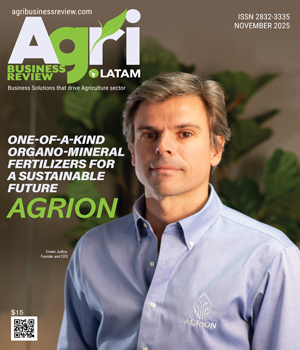
AGRION is rewriting the rules of modern fertilization by closing the long-standing gap between productivity and sustainability. For decades, farmers had to choose between fast yields from chemical fertilizers and healthy soils from organic ones. AGRION’s pelletized organo-mineral fertilizers combine both, giving growers immediate results without compromising the soil’s long-term health. How? Each pellet is built like a nutrient capsule. Inside, nitrogen, phosphorus and potassium (NPK) are blended with sugarcane by-products such as filter cake and vinasse. These are organic matter rich in carbon and microbial food. As the outer shell naturally decomposes, nutrients are released slowly, in sync with crop demand. That steady release prevents wasteful leaching and keeps the soil biologically active. Over time, fields become more fertile, water retention improves and microbial life flourishes—creating a soil ecosystem that feeds itself season after season. For farmers, yield increases of up to 20 percent while making stronger, more resilient land for tomorrow. Nowhere is this impact more visible than in Latin America’s tropical soils. Heavy rains and sandy ground can wash away as much as 70 percent of the NPK from conventional fertilizers, which release their nutrients in a single burst. AGRION’s slow-release technology slashes those losses to just 20 to 30 percent. “Using our organo-mineral fertilizers, farmers spend less on inputs, crops absorb more nutrients, and the overall footprint of farming shrinks, while soils grow stronger year after year,” says Ernani Judice, founder and CEO. One Innovation, 500 Ways to Grow Smarter AGRION’s fertilizer pellets aren’t designed as a one-size-fits-all. Each formulation is engineered to match the rhythm of the crop. Denser, thicker-layered pellets decompose slowly, providing a sustained feed for long-cycle crops like sugarcane and coffee for months. Lighter, thinner-layered versions break down faster, meeting the rapid nutrient demands of soybeans and other short-cycle crops. With more than 500 formulations tailored to various soils and growth cycles, AGRION transforms fertilizer design into a science of precision, delivering nutrients at the optimal pace for the right crop, every time.
Top Sugarcane Producer in Latin America 2025
"Sugarcane is the oil of the tropics, and we’re proving it can fuel not just Guatemala but also the future of food, energy, and biotechnology,” says Jorge R. Leal, CEO of Magdalena. That belief has carried Magdalena from a family mill to a global sustainable innovator. Leadership passed from founder Luis Fernando Leal to his wife, Yolanda, who brought a community-first philosophy, to Jorge R. Leal today, who carries that ethos into international expansion and innovation. Magdalena supplies roughly 24 percent of Guatemala’s sugar output and contributes about 10–12 percent of the nation’s energy needs through biomass power. It also produces high-grade sugar and ethanol for domestic and export markets. The business now spans agri-energy and early-stage biotechnology, with initiatives in synthetic biology and biomolecules. Operations emphasize circular practices, renewable power, and sustainable agriculture. Turning Sugarcane into Energy, Ethanol and Opportunity Magdalena sees itself as a company that converts solar energy into sugar, ethanol, and renewable energy for Guatemala and exports worldwide. Bagasse produces steam that drives turbines for electricity, and sucrose becomes refined sugar or high-purity alcohol for beverage and pharmaceutical uses. As a price-taker in sugar and electricity, the company relies on cost and yield discipline, precise material accounting and circular byproduct reuse to cut waste and imported-fuel dependence. Its high-specification sugar qualifies for international bottlers, while its alcohol meets demanding standards in the beverage industry. The electricity business is primarily local, with periodic exports to El Salvador. Magdalena supplies the grid at competitive cost under Guatemala’s regulated merit-order market, where the lowest-cost units dispatch first and all dispatched units receive the marginal price. Biomass cogeneration provides electricity that is not dependent on weather or imported fuels. High-Quality Sugar Output Supporting Global Brands The Magdalena Sugar Mill has the capacity to process 40,000 metric tons of sugarcane per day. Harvesting is concentrated in Guatemala’s dry season, yielding several million tons annually. Sugar production is the primary focus, yet nothing goes to waste. Non-crystallized sugars are processed into alcohol, with a facility capable of producing up to 420,000 liters per day from molasses. The company also operates a refinery, producing refined white sugar and other grades such as brown and raw sugar. With a capacity of 3,200 tons of refined sugar daily, it ranks among the larger mill-integrated refineries in the Americas.
Top Agricultural Management Solution in Latin America 2025
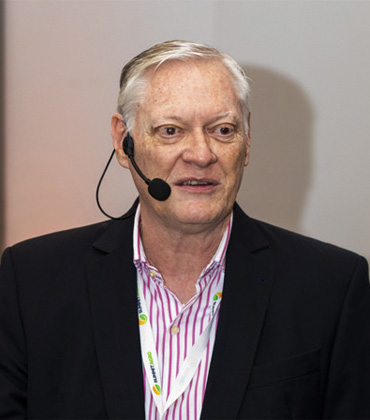
Generic solutions are no longer adequate to support farming practices in the modern agricultural landscape. Maintaining soil health and controlling pests demands innovative, tailored approaches that support long-term success. Summit Agro, a global agricultural company, with strong presence in Latam addresses this need by placing customers at the core of its strategy to advance sustainable innovations. It offers a comprehensive portfolio of high-performance, non-generic crop protection products and biological solutions designed to meet the evolving challenges of modern agriculture. A strong field presence combined with personalized support and a dedicated customer-facing team strengthens its ability to build long-lasting partnerships. Advanced technologies, locally tailored programs and a mutual commitment to long-term agricultural success reinforce this trust. “We believe loyalty is built on a comprehensive value proposition that combines technology, quality and results,” says Luis Eduardo Silva, president of Summit Agro Argentina. Guided by its Be Green philosophy, Summit Agro’s environmentally responsible solutions boost productivity while ensuring a low environmental impact. With deep roots in Japanese technology and an innovative approach to agriculture, it helps farmers protect their crops, preserve soil, reduce input costs and meet sustainability goals. Its product offerings comprise a range of herbicides, insecticides and fungicides, all designed for targeted crop protection. Products like ROMEO, co-developed with Agrauxine, and Taisei, developed in collaboration with CONICET and the University of Tucumán in Argentina, demonstrate its ability to leverage both innovation and scientific partnership. The company’s emphasis on sustainability and innovation is best exemplified through its SEIPRO product line. This umbrella brand encompasses biological products focused on both pre-and post-harvest needs, including bio stimulants, biopesticides, biofertilizers and elicitors. Each product undergoes extensive field trials, adapted to local conditions and assessed against the highest standards of safety, quality and traceability. Its regulatory affairs teams work closely with authorities worldwide to ensure every solution meets legal and environmental requirements. Significant investments in R&D programs, in collaboration with various institutions, have resulted in the co-development of new molecules, biologicals and application technologies.
CXO INSIGHTS
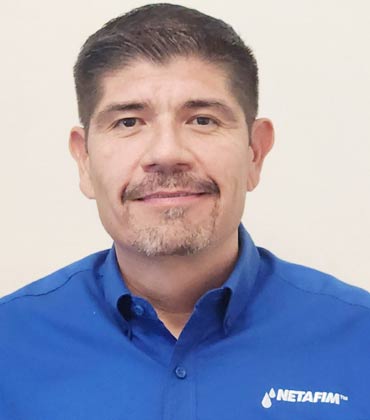
Precision Farming and its adoption challenges for Latin American countries
Oscar Gonzalez, Regional Director of Strategic Products and Crops LTAM, Netafim México

Livestock Traceability: The Challenges and Progress for Minerva Foods in South America
Tamara Lopes, Corporate Executive Sustainability Manager, Minerva Foods
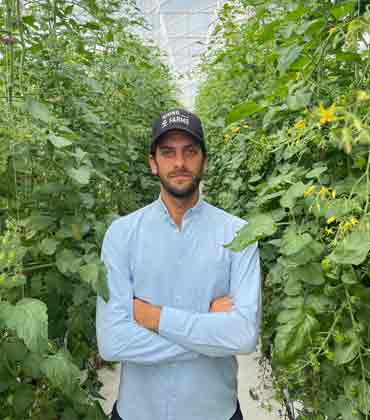
What does Mexican agriculture need to truly exploit its potential in international markets?
Mauricio Ricaud, Founder & CEO, Rising Farms

The Role of Bio-specialties in Sustainable Agriculture
Armando Russi, Head of Sustainability, Comms & Public Affairs, Grupo AJE

Sustainable Agriculture
Janaina Padoveze, Sustainability Manager and Thiago Jacob Miqueleto, Head of Marketing & Business Intelligence, Ajinomoto do Brasil [TYO: 2802]

Data As Key Enabler to Regenerative Agriculture
Marcus Teixeira, Head of Data and Analytics, Digital Innovation Americas, Yara International ASA [OTCMKTS: YARIY]

Leading Change with Risk, Structure and Measurement
Federico Alfredo Kladt Kladt, R&D&I Director, Liotécnica
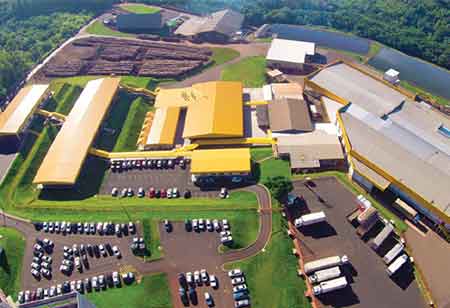

IN FOCUS
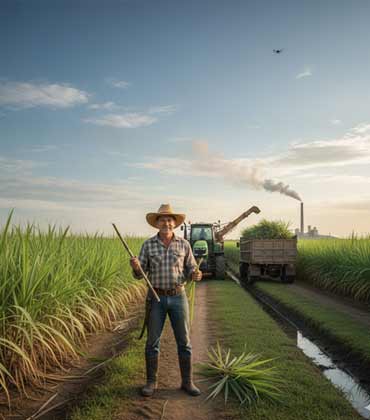
Mechanization and Soil Stewardship in Latin America's Sugarcane Fields
Latin America's sugarcane harvesting is transitioning from manual to mechanized methods, enhancing efficiency while promoting soil health through the integration of innovative practices and technology.
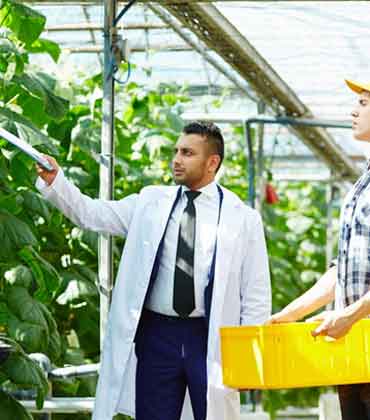
Rebuilding Agroecosystems Through Regenerative Nutrition Practices in Latin America
A shift in agriculture is occurring, recognizing soil as a living ecosystem. Regenerative practices and microbial inoculants are crucial for sustainable farming and enhancing soil health.
EDITORIAL
Growing Smart with Better Plant Nutrition
In Latin America, the intersection of plant-nutrition input and sugar-cane production is emerging as a compelling axis of growth within agribusiness. Farmers across Brazil, Argentina and Colombia now increasingly recognize that delivering the right nutrients at the right moment, including soil pH correction, tailored NPK blends, micronutrients, isn’t merely an agronomic nicety, it is the engine of yield and sustainability. Indeed, despite vast tracts of fertile land, the region still grapples with input-access, affordability and uneven nutrient use, creating an efficiency gap that leaves opportunity on the table.
Sugarcane remains a stalwart commodity for Latin America, with Brazil dominating global production and shaping both domestic fuel profiles and export sugar markets. The synergy is clear: optimized plant nutrition drives better cane yields and quality, strengthening the value chain from field to mill and into bioethanol or refined sugar.
Key players are advancing this integration. Marcus Augusto Silva, Supply Chain Director at GTFoods Group, ensures that inputs such as nutrients and fertilizers reach high-potential growing areas in a timely and cost-effective manner. André Carvalho, Marketing and Innovation Director at Mantiqueira Brasil, works downstream to demonstrate how improved crop performance translates into differentiated product development, brand messaging, and market positioning. Together, Silva and Carvalho exemplify how upstream agronomy and downstream commercial strategy connect in Latin America’s agri-complex.
Looking ahead, the dual agenda of plant nutrition optimization and sugarcane value-chain integration offers not only growth but resilience. Latin America’s agribusiness can shift from commodity volume to value creation, moving from simply growing more cane to growing smarter, cleaner, and better-nourished cane.
In this roundup, we spotlight agribusiness as a sector defined by precision, innovation, and integration. The challenge and opportunity lie in building models that not only increase yields but also elevate the nutrition-to-sugarcane pipeline into a sustainable, value-driven engine for years to come.
