Thank you for Subscribing to Agri Business Review Weekly Brief
Agri Business Review: Specials Magazine
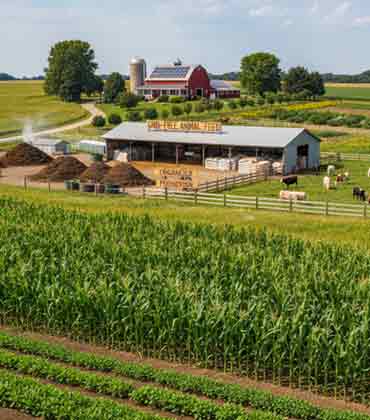
A few old barns, a tractor, a grinder mixer and a couple of bins; that was all a small group of dairy farmers in Todd County, Kentucky, had when they set out to feed their herds with clean, certified organic grain. In a state with just two organic dairies and no mill to serve them, the odds of finding a reliable organic feed source were slim. But when no supplier could meet their standards, they turned determination into action and built their own small mill from scratch. That act of resolve grew into Kentucky Organic Farm and Feed Inc. (KOFFI), one of the most trusted names in certified organic feed and fertilizer, serving farms in 25 states. From the outset, KOFFI operated entirely within the organic system, unlike conventional mills that run both organic and nonorganic lines side by side. No shared equipment or storage meant no cross-contamination and total traceability from the field to the feed bag. “We produce feeds with clean grain, traceable sourcing and zero compromise on quality,” Melvin Troyer, CEO.
Sustainable Poultry Breeding and Development Of The Year 2026
Producing poultry has never been just about growing birds faster. It is about balancing three key and potentially contrasting demands: meat output, environmental sustainability, and animal welfare. As global demand for affordable protein continues to rise, feed costs dominate margins and environmental expectations tighten. Welfare has become a defining measure of industry credibility, shaped by customers, NGOs, and retailers. This tension plays out daily in poultry operations. Genetic potential should translate into robust, consistent performance without compromising bird health. Disease risk, sustainability pressures, and supply chain challenges have become strategic concerns, not operational footnotes. As poultry cements its role as the world’s most accessible and affordable animal protein, the challenge is clear: growth depends on achieving balance and scale. These pressures converge at the very start of the value chain, where long-term decisions shape everything that follows. As one of the world’s leading poultry breeding companies, Aviagen operates at this critical intersection, using genetics as a strategic driver to align efficiency, robustness, and bird welfare. By embedding balance into breeding goals, Aviagen helps producers meet today’s demands while preparing for what comes next. “Our purpose is to advance poultry genetics that help the industry grow responsibly, meeting rising demand for affordable protein while improving animal welfare, reducing environmental impact, and strengthening the resilience of global supply,” says Santiago Avendaño, VP of Global R&D..

CXO INSIGHTS

Six Sigmas Impact on the Agriculture Industry
Robert King, Executive Vice President (& President), Crop Protection Business, Corteva Agriscience [NYSE: CTVA]

Blending Tradition with Innovation: Navigating Sales Strategy, Sustainability and Technology
Dave Gonnella, Vice President of Sales, Gonnella Baking

Building Foundational Elements for Sustainable Food Safety Management System
Olawumi Wumi Yusuff, Director, Food Safety at Ferrara

Redefining Food Safety in School Nutrition
Jason Schwartz, Director of Safety and Risk Management, SFE- Southwest Foodservice Excellence

Mastering Manufacturing Start-Ups
Kyle Jansma, Plant Manager, Grande Cheese Company


IN FOCUS
The Strategic Imperative of GMO-Free Feed in Modern Agriculture
The agricultural industry is shifting towards GMO-free animal feed, prioritizing quality, transparency, and consumer trust, while also optimizing animal health and securing higher market value.
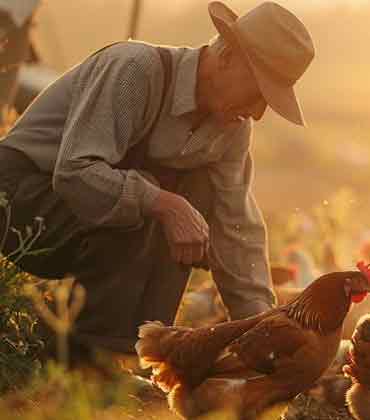
Advancing Sustainable Poultry Breeding for Health and Resilience
Exploring advanced breeding techniques that enhance disease resistance, feed adaptability, and longevity to support sustainable and resilient poultry production systems.
EDITORIAL
Advancing Certified Organic Standards and Precision in Modern Agribusiness
The global push toward traceable, sustainable agriculture is redefining standards across feed and fertilizer production. In this edition, we examine how certified organic systems, precision nutrition, and data driven decision making are reshaping supply chains and strengthening producer trust.
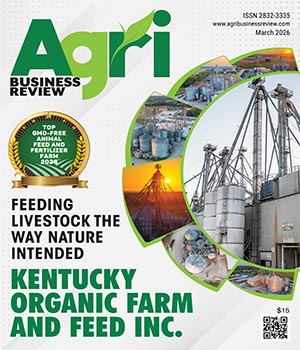
Our cover story, Kentucky Organic Farm and Feed Inc., recognized as Top GMO-Free Animal Feed And Fertilizer Farm 2026, demonstrates how operational discipline anchors long term credibility. Founded by farmers in Todd County, Kentucky, the mill was built to meet a clear gap in certified organic feed supply and now serves farms across 25 states. Unlike facilities that run organic and nonorganic lines in parallel, Kentucky Organic Farm and Feed operates exclusively within the organic system, ensuring full traceability, clean-truck affidavits, certified sourcing, mycotoxin testing, and strict moisture benchmarks at intake. With expanded grain cleaning and drying capabilities and significant storage capacity, the company maintains year round quality control while offering custom soy-free and corn-free formulations. Its fertilizer program mirrors the same compliance rigor, reinforcing an integrated organic ecosystem.
Also featured is Aviagen which is a global poultry breeding company focused on developing chicken genetics for efficient, responsible meat production. It supplies parent stock to producers worldwide, emphasizing balanced breeding that supports performance, animal welfare, and sustainability. Through data-driven selection, adaptable breeding lines, and strong biosecurity, Aviagen helps customers manage costs, meet welfare expectations, reduce environmental impact, and maintain reliable poultry supply across diverse production environments.
This issue’s CXO insights further contextualize the sector’s evolution. Dr. Stacey Roberts, Senior Director of Nutrition at Versova, underscores how precision feed formulation, enzyme innovation, and nutrient optimization drive both environmental and economic sustainability. Enrique Leon, North America Operations Director at American Sugar Refining, highlights how cloud based AI enhances predictive modeling in agriculture by improving scalability, accessibility, and data integrity across operations.
Together, these perspectives reinforce a single imperative: agriculture advances when science, transparency, and operational control align. We invite readers to explore this edition and examine how disciplined innovation is shaping the next chapter of sustainable agribusiness.
