
Thank you for Subscribing to Agri Business Review Weekly Brief
Agri Business Review: Specials Magazine
AGCO Corporation (NYSE: AGCO), based in Duluth, Georgia, is a leading American manufacturer of agricultural machinery committed to helping farmers sustainably feed the world. Since its founding in 1990, AGCO has prioritized a Farmer-First approach, combining cutting-edge technology with a diverse portfolio of brands to modernize farming practices. By providing innovative equipment that enhances efficiency and reduces environmental impact, AGCO empowers farmers to meet the challenges of modern agriculture. “Technology is transforming how farmers operate and providing them with the potential to produce more food in more resource-efficient ways, a critical need given the world’s expanding population. Our Farmer-First focus centers on helping them realize this potential and enable them to operate more profitably and sustainably,” says chairman, president and CEO Eric Hansotia. AGCO Corporation delivers value to farmers and OEM customers through its differentiated brand portfolio including Fendt, Massey Ferguson, Valtra, Challenger, and GSI. These brands serve a broad spectrum of farming needs, providing tractors, combines, hay tools, self-propelled sprayers, seeding equipment, tillage tools, and grain storage systems. In addition, the company delivers advanced livestock management solutions and retrofittable precision agriculture technologies, ensuring that farmers of all scales and specializations can optimize their operations. Through a global distribution network of more than 3,100 dealers and distributors, AGCO Corporation ensures accessibility to its products for small-scale farmers and large agribusinesses, reinforcing its commitment to supporting agricultural communities worldwide. Precision agriculture is a cornerstone of AGCO Corporation’s mission. It allows farmers to make data-driven decisions that enhance efficiency, productivity, and sustainability. Through its PTx technologies, the company provides solutions that optimize every stage of the crop cycle, from planting to fertilization to harvesting. These advancements enable farmers to increase yields while reducing input costs and environmental impact. One of AGCO Corporation’s most notable contributions is its Radicle Agronomics suite, which transforms soil nutrient management by automating soil sampling and analysis. This innovation helps farmers apply fertilizers more precisely, ensuring that crops receive the proper nutrients while minimizing waste and runoff. Additionally, AGCO Corporation’s retrofit solutions allow existing machinery to be upgraded with smart technologies, enhancing efficiency across mixed fleets and extending the life cycle of equipment.
![Agco Corporation [NYSE: AGCO]: Advancing Agriculture Through Connected Data Systems](https://www.agribusinessrevieweurope.com/newstransfer/upload/9-u344-.jpg "Agco Corporation [NYSE: AGCO]: Advancing Agriculture Through Connected Data Systems")
AgTech
Why does carbon dioxide enrichment significantly influence productivity in controlled environment agriculture? Carbon dioxide directly drives photosynthesis. Most crops grown in controlled environment agriculture respond strongly to elevated CO₂ levels. The challenge is cost. “Carbon dioxide enrichment provides a low-hanging fruit opportunity for yield improvement,” says Mathew Halter, founder and CEO of TerraFerm AgTech. “But it’s an input cost.” To enrich a grow room, a farm must purchase CO₂, store it and continuously refill the space to maintain target concentration levels. At a small scale, that cost may be manageable. At larger production volumes, maintaining full-time enrichment becomes expensive. Many farms are enriched only for limited hours because sustaining higher concentrations all day does not justify the expense. TerraFerm addresses that constraint directly. How does TerraFerm capture fermentation CO₂ and deliver it directly to farms? Instead of relying on compressed industrial CO₂ delivered in tanks, TerraFerm captures CO₂ produced during alcohol fermentation. Breweries release CO₂ continuously as part of normal production. TerraFerm installs a modified fermentation lock that directs the gas into a low-pressure header connected to a nearby farm.

Seed & Grain

What barriers have historically limited access to high-quality seeds for home gardeners? There’s a question Maxim Kaufman, CEO and founder of Organo Republic, set out to answer when he founded the company in 2017. ‘Why growing your own food is often made to feel like a premium or niche pursuit?’ High-quality seeds were available, but access to them was often limited by pricing, positioning and distribution models that did not prioritize everyday home gardeners. As a result, growing food at home became less about possibility and more about perceived complexity and cost. Organo Republic was built to address that gap. “Access is more important than profit. We don’t build this business around high margins. The goal is to make sure more people can grow their own food successfully,” says Maxim Kaufman.
Agriculture Sustainability
Farm49 is a Colorado farm built around a single crop that remains largely unfamiliar to U.S. consumers despite its long global history—sea buckthorn. Eight years ago, its founder, Nadia Artman, made the deliberate and challenging decision to cultivate sea buckthorn berries locally, knowing it would take four to five years before the trees produced meaningful yields. That long wait, combined with the demands of meticulous, manual harvesting, made the venture a high-risk agricultural undertaking. Through sustained cultivation and steady community engagement, Farm49 has introduced this hardy, nutrient-rich berry to the U.S. market. “We truly believe in this berry and its ancient origin and tradition. That’s why we cultivate it,” says Nadia Artman, Steward. Sea buckthorn has roots in ancient Greek, Hindu, Buddhist and Tibetan traditions, earning the Greek name “shining horse” after soldiers observed its restorative effects on their horses. Farm49 locally grows sea buckthorn and offers it as a regular food item rather than a “trend.” Beyond cultivating the berries and producing the Fruitulu fruit rolls and juice, the farm operates with a deeply rooted philanthropic mission. The proceeds generated from its produce are directed toward supporting animals in need. Each year, the farm contributes to several animal non-profit organizations, demonstrating an ongoing and expanding commitment to animal welfare. This dedication is a central pillar of its identity. Every purchase extends beyond nutrition and quality; it actively supports compassion-driven, regenerative and community-focused efforts.

Agtech

As low-carbon fuel markets mature, carbon intensity (CI) is becoming more than a reporting requirement for biofuel producers and feedstock producers. The lower the carbon intensity score attached to a gallon of fuel, in many markets and credit programs, the greater its market value. But calculating that score accurately across thousands of acres, suppliers, and operational variables has become operationally difficult due to the fragmented nature of ethanol supply chain production data. Information is scattered across spreadsheets, operational systems, upstream suppliers, vendor networks, and compliance systems that were never designed to communicate with one another in real time. That growing disconnect and complexity created a major opportunity for Preston Brown, founder and president of incite.ag. Instead of building another all-purpose sustainability platform competing to serve every industry at once, he created incite.ag to embed CI intensity management directly into the day-to-day operations of biofuel producers, which streamlines their ability to navigate increasingly complex low-carbon fuel markets. His company operates with what he describes as an ‘inch wide, mile deep’ philosophy, focusing exclusively on biofuel producers and their feedstock suppliers in the renewable fuel economy. The strategy is centered on automating how biofuel plants and farmers exchange operational data, processing and classifying that information in real time, and generating both the fuel and feedstock CI scores. That includes integrating directly into existing plant systems infrastructure and on-farm management platforms without forcing clients or their suppliers to restructure existing systems and practices. The philosophy shapes everything from product development to customer engagement by building on existing low-carbon fuel programs, tax-credit methodologies, and established value-add markets that already influence producer economics. “Every tool we build is designed around the exact workflows, compliance structures, and market opportunities our customers operate within,” says Brown.
Agri Production

Indoor Farming at Pan American Seed
Gus Tassara, Global Director Seed Production, Ball Horticultural Company
Agri Biotech

Improving Public Health Through Agriculture
Colleen M. Zammer, Vice President of Varietal Solutions Growth & Corporate Innovation, Bay State Milling Company
Agri AI

Harvesting the Future: The Transformative Impact of AI (Artificial Intelligence) on Agriculture
Jeremy Groeteke, Global Head of IT & Digital Strategy, Syngenta Group
Agri AI

Preparing Seed R&D for a Decade of AI, Automation, and Accelerated Genetic Gain
Judith Rivera, Global Applied Technologies Optimization Leader, Syngenta
Agri Marketing

Making Science Matter Through Marketing
Madi Marsteller, VP of Marketing, HGS BioScience
IN MY OPINION
Agriculture Sustainability
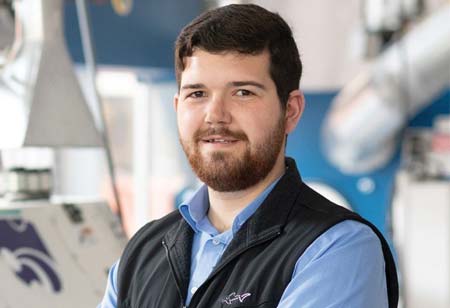
Embracing Regenerative Agriculture
Phoenix Dugger, Senior Manager, Environmental Social Governance (ESG), Ardent Mills
LAST WORD
Fertilizers and Nutrition
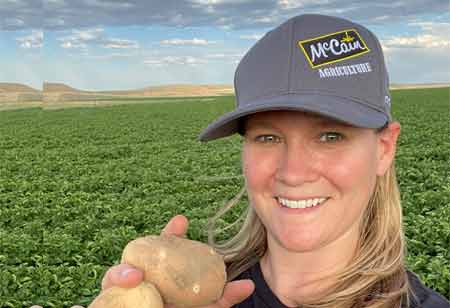
Potato Varieties: A Vision for 2030
Nicole Nichol, Director of Ag, Variety Development & Seed Supply, North America, McCain Foods
IN FOCUS

Modernizing Farming Practices with Advanced Seed Treatments
Agricultural seed treatment services improve crop protection, sustainability, precision farming, climate resilience, and early plant development for stronger agricultural productivity.
Cultivating Change: The Growing Importance of Service in the Equipment Sector
Farm equipment markets are shifting toward flexible access models and service-led strategies, redefining competition through adaptability, reliability, and long-term customer engagement.
EDITORIAL
Agriculture’s Shift toward Resilient Growth
Agriculture is entering a new chapter where resilience is defined not by scale alone, but by the ability to adapt, optimize resources and build stronger supply chains. In this edition of Agri Business Review, we explore how growers, innovators and industry leaders are turning today’s challenges into opportunities for sustainable growth.
Our cover story features AGCO Corporation, recognized as the Top Precision Agriculture Solutions Provider 2026, for helping farmers harness the power of connected data. Through its Fuse smart farming ecosystem, AGCO is simplifying precision agriculture with open, interoperable technologies that integrate equipment, analytics and farm operations, enabling producers to improve efficiency and make better-informed decisions.
This edition also recognizes Organo Republic as the Top Non GMO Seed Variety Solution 2026 for making high-quality non GMO, heirloom and non-hybrid seeds more accessible. TerraFerm AgTech, named the Top Crop Yields Technology 2026, is advancing controlled-environment agriculture through fermentation-derived CO₂ enrichment solutions.
We are also proud to spotlight Farm49, honored as the Top Sea Buckthorn Farm 2026, for introducing regenerative sea buckthorn cultivation to the U.S. market while supporting animal welfare initiatives. incite.ag has been recognized as the Top Agribusiness Carbon Intensity Scoring Software Company 2026 for helping biofuel producers transform carbon intensity management into a strategic advantage through real-time insights and compliance readiness.
We also feature insights from Phoenix Duggar, Corporate Social Responsibility Manager at Ardent Mills, who shares how regenerative agriculture practices can improve soil health, enhance water stewardship and strengthen grower economics. Nicole Nichol, Director of Variety Development & Seed Supply at McCain Foods, explores the role of climate-resilient potato varieties and diversified seed pipelines in securing the future of agricultural production.
As agriculture navigates growing environmental, economic and operational complexity, organizations that combine innovation with practical execution and long-term thinking will continue shaping the industry’s future. We invite readers to explore this edition’s perspectives on resilience, productivity and sustainable agricultural growth.
