
Agri Business Review Magazine

Livestock Virtual Fencing Solutions

Livestock Virtual Fencing Solutions specializes in technology-driven livestock management systems that use GPS tracking, wearable devices, and digital boundary controls to manage grazing patterns without physical fencing. These providers help agricultural operations improve land utilization, animal monitoring, pasture management, and operational efficiency while supporting sustainable farming practices and reducing infrastructure maintenance costs.

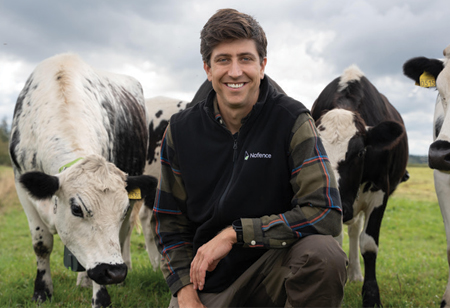
Nofence: A New Era in Livestock Farming
Nofence
A New Era in Livestock Farming
Joachim Kähler, CEO
For centuries, livestock farming relied on posts, wire and rigid boundaries. Nofence, developed by Norwegian engineer and goat farmer Oscar Hovde, is changing that, turning a labour-intensive process into a connected, data-driven system.

Virtual Fencing and the Future of European Livestock Farming

As Europe advances the goals of the European Green Deal and the Digital Decade, agriculture is adopting virtual fencing. This approach, which combines Global Positioning System (GPS) technology and the Internet of Things (IoT), is transforming how shepherds manage livestock and land. By replacing physical barriers with cloud-managed boundaries, producers are improving operational efficiency and leading new practices in regenerative land management and animal welfare.

Ambitious partnerships are key to scaling regenerative agriculture
ADM [NYSE: ADM]
Ambitious partnerships are key to scaling regenerative agriculture
Ana Yaluff, Senior Director, Sustainability- EMEA, LATAM & APAC

Climate change continues to be one of the most critical issues of our time. The science shows we must pursue efforts to limit temperature rise to 1.5 °C above-preindustrial levels to avoid the worst effects of climate change. However, we can only do that by achieving net zero emissions by 2050, meaning the amount of greenhouse gases released into the atmosphere is equal to the amount removed from the atmosphere, resulting in no net increase in atmospheric concentrations of these gases.

Livestock Virtual Fencing Solutions Info

Q1
What Do Livestock Virtual Fencing Solutions Providers Offer to Farmers and Ranchers?
Managing grazing movement across large properties can require constant labor, physical fencing repairs and repeated herd relocation. Top Livestock Virtual Fencing Solutions Providers develop GPS-enabled containment systems that allow farmers and ranchers to manage livestock boundaries digitally. These systems commonly use wearable collars, mobile applications and cloud-based monitoring tools to guide animal movement without relying entirely on permanent fencing infrastructure. Virtual livestock management companies often support cattle, sheep and mixed grazing operations across remote or difficult terrain.
Q2
What Features Are Commonly Included in Virtual Fencing Systems for Livestock?
Most systems combine animal tracking with remote pasture management tools. Top Livestock Virtual Fencing Solutions Providers typically offer GPS-based boundary mapping, real-time herd monitoring, grazing rotation controls and mobile alerts tied to animal movement patterns. Livestock monitoring technology providers may also include health tracking data, battery monitoring and pasture utilization analytics within the same platform. In rotational grazing programs, farmers often use these systems to adjust grazing zones quickly without installing additional physical fencing across changing pasture conditions.
Q3
Why Is Demand Increasing for Livestock Virtual Fencing Solutions?
Labor shortages, land management pressure and rising fencing costs continue affecting agricultural operations. Top Livestock Virtual Fencing Solutions Providers are seeing increased interest from producers looking to improve grazing efficiency while reducing maintenance demands tied to traditional fencing systems. Regenerative agriculture practices and controlled grazing programs have also contributed to adoption growth because virtual fencing allows more flexible pasture management. Remote livestock operations benefit particularly from systems that reduce travel time associated with checking fences and relocating animals manually.
Q4
How Are Leading Livestock Virtual Fencing Solutions Providers Evaluated?
Field reliability matters more than software features alone. Top Livestock Virtual Fencing Solutions Providers are commonly evaluated on GPS accuracy, collar durability, battery performance and how consistently livestock respond to boundary cues. Agricultural technology companies in this category may also be assessed on mobile connectivity, ease of pasture setup and system performance in remote grazing environments with limited infrastructure. Farmers frequently examine customer support quality and animal welfare considerations before adopting large-scale virtual fencing systems.
Q5
How Do Livestock Virtual Fencing Solutions Create Value for Agricultural Operations?
Traditional fencing can become expensive to install and maintain across large grazing properties. Top Livestock Virtual Fencing Solutions Providers help producers reduce physical fencing requirements while improving pasture utilization and grazing flexibility. Virtual grazing management systems may also support more controlled forage recovery by allowing faster rotation adjustments during seasonal changes or drought conditions. For many livestock operations, the value comes from labor reduction, better land use visibility and improved herd movement control without constant on-site intervention.
Q6
What Role Do Technology and Animal Behavior Expertise Play in Virtual Fencing?
Virtual fencing systems rely on both hardware reliability and predictable livestock response patterns. Top Livestock Virtual Fencing Solutions Providers increasingly use GPS tracking, wireless connectivity and behavioral conditioning models to guide animal movement within digital boundaries. Technology teams must account for terrain variation, weather exposure and connectivity limitations that affect rural deployment conditions. Expertise in livestock behavior also remains important because successful adoption depends on how animals respond to audio or stimulus-based boundary guidance over time.