Agri Business Review Magazine

GMO Free Animal Feed and Fertilizer Farm

GMO Free Animal Feed and Fertilizer Farms produce natural feed and organic fertilizer products without genetically modified ingredients or synthetic additives. These operations support sustainable agriculture, livestock nutrition, and soil health by providing environmentally responsible farming solutions that promote product transparency, natural cultivation practices, and growing consumer demand for GMO-free agricultural products.

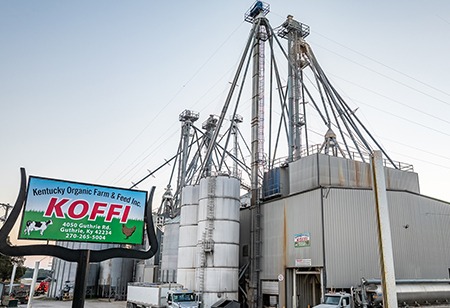
Kentucky Organic Farm and Feed Inc.: Feeding Livestock the way Nature Intended
Kentucky Organic Farm and Feed Inc.
Feeding Livestock the way Nature Intended
Melvin Troyer, CEO, Gideon Beiler, Sales Manager
A few old barns, a tractor, a grinder mixer and a couple of bins; that was all a small group of dairy farmers in Todd County, Kentucky, had when they set out to feed their herds with clean, certified organic grain.

The Strategic Imperative of GMO-Free Feed in Modern Agriculture

For decades, the agricultural industry operated under a paradigm where efficiency, yield maximization, and cost reduction were the sole determinants of success. However, a new era has emerged—one defined by quality, transparency, and holistic wellness. At the center of this transformation lies a critical, often overlooked component of the food supply chain: animal feed.

Evaluating GMO-Free Animal Feed and Fertilizer Farms Long-Term Supply Integrity

Executives responsible for sourcing GMO-free animal feed and organic fertilizer operate in a procurement environment shaped by traceability requirements, grain price volatility and rising expectations from retailers and end consumers. Organic livestock producers must substantiate that every input, from raw grain to finished ration, meets standards that extend well beyond the absence of genetic modification. Documentation discipline, inspection readiness and supplier transparency now weigh as heavily as price per ton.

Six Sigmas Impact on the Agriculture Industry
Corteva Agriscience [NYSE: CTVA]
Six Sigmas Impact on the Agriculture Industry
Robert King, Executive Vice President (& President), Crop Protection Business

How has Six Sigma enabled many agricultural operations to minimize the number of assets that remain unused?

Six Sigma methodology and philosophy can greatly improve the industry's overall efficiency and productivity. By following Six Sigma's principles of continuous improvement and innovation, agricultural operations can identify and eliminate process inefficiencies, reduce waste, and optimize resource allocation. This can result in increased asset utilization, ensuring that no asset is left inactive or under utilized. Additionally, Six Sigma promotes data-driven decision-making and the utilization of statistical instruments for process enhancement. This methodology can assist operations in analyzing and optimizing their asset management strategies, identifying areas where assets are not being utilized proficiently, and implementing corrective measures.

GMO Free Animal Feed and Fertilizer Farm Info

Q1
What Do Top Organic Animal Feed and Fertilizer Companies Provide to Farms?
Top Organic Animal Feed and Fertilizer Companies supply livestock feed, soil nutrients and farm inputs designed to support organic and non-GMO agricultural practices. These businesses often provide feed for poultry, cattle, swine, goats, sheep and horses, along with organic fertilizers, soil amendments and mineral supplements. Many organic feed manufacturers also offer bulk delivery, custom feed blends and specialty formulations for farms with specific nutritional requirements. Demand for organic livestock products continues to influence feed purchasing decisions. Farmers increasingly look for suppliers that maintain traceable ingredient sourcing, certified organic handling practices and consistent nutritional standards. Organic fertilizer providers also help growers improve soil structure, nutrient availability and long-term soil health through natural inputs.
Q2
What Do GMO-Free Animal Feed and Fertilizer Farms Provide to Livestock Producers?
Top GMO-Free Animal Feed and Fertilizer Farms supply feed products and soil nutrition solutions designed for farms that want to avoid genetically modified ingredients and synthetic additives. These farms typically produce livestock feed for poultry, cattle, swine, goats and other animals while also offering organic or natural fertilizer products that support soil health. Many GMO-free feed providers also create custom feed blends, bulk delivery options and species-specific nutrition programs to help farmers maintain herd performance and product consistency.
Q3
What Products and Services Are Commonly Offered by GMO-Free Feed and Fertilizer Farms?
Farmers working with Top GMO-Free Animal Feed and Fertilizer Farms often have access to bagged feed, bulk grain, mineral supplements, custom rations and fertilizer products formulated for organic or regenerative farming systems. Some facilities also provide soy-free or corn-free feed options, delivery scheduling and nutritional consultation services. GMO-free animal feed companies may support both small family farms and larger agricultural operations that require traceability, ingredient transparency and dependable feed sourcing throughout the year.
Q4
Why Is Demand Growing for GMO-Free Animal Feed and Fertilizer Solutions?
Consumer interest in organic agriculture, clean-label food production and sustainable farming practices continues to influence purchasing decisions across the agricultural sector. Top GMO-Free Animal Feed and Fertilizer Farms are benefiting from demand among livestock producers that want better ingredient visibility and stronger alignment with organic certification standards. Growth in regenerative agriculture and specialty livestock markets has also increased interest in non-GMO feed solutions, particularly among farms focused on premium dairy, poultry and meat production. Even in regions where certified organic farming remains limited, producers increasingly value feed traceability and reduced exposure to synthetic inputs.
Q5
How Are Top GMO-Free Animal Feed and Fertilizer Farms Evaluated?
Selection criteria for Top GMO-Free Animal Feed and Fertilizer Farms often include ingredient sourcing standards, production consistency, storage practices and the ability to maintain separation from conventional agricultural inputs. Buyers also evaluate feed quality, nutritional formulation, delivery reliability and compliance with organic or non-GMO verification requirements. Farms that offer custom blending capabilities and transparent sourcing practices are often viewed more favorably because livestock nutrition directly affects animal health, productivity and long-term farm profitability.
Q6
What Value Do GMO-Free Feed and Fertilizer Providers Create for Farmers?
Many livestock producers work with Top GMO-Free Animal Feed and Fertilizer Farms to reduce contamination risks, improve feed consistency and support long-term soil management goals. Reliable non-GMO feed sourcing can help farms maintain certification compliance while minimizing supply disruptions that may affect production schedules or livestock performance. Fertilizer products developed for natural farming systems may also improve soil structure and nutrient balance over time. These outcomes can influence animal health, crop quality and operational stability across multiple growing seasons.
Q7
How Are Innovation and Nutrition Science Shaping This Category?
Modern Top GMO-Free Animal Feed and Fertilizer Farms increasingly rely on feed formulation expertise, ingredient testing and specialized milling systems to improve consistency and nutritional value. Many GMO-free livestock feed providers now develop species-specific blends that account for protein requirements, grazing conditions and changing feed costs. Technology also supports inventory management, quality tracking and delivery coordination. Farms that combine agricultural knowledge with nutrition science are often better positioned to support producers that require dependable feed performance and verified ingredient standards.