
Agri Business Review Magazine

Agricultural Crop Protection and Agrochemical Distributors

Agricultural crop protection and agrochemical distributors provide growers, cooperatives and agribusinesses with pesticides, herbicides, fungicides, fertilizers and related crop input products. With a focus on product availability, regulatory compliance, field support and supply reliability, they support healthier crops, improved yields and more efficient farm operations.

AMVAC Latam: Enhancing Crop Outcomes Through Integrated Field Solutions
AMVAC Latam
Enhancing Crop Outcomes Through Integrated Field Solutions
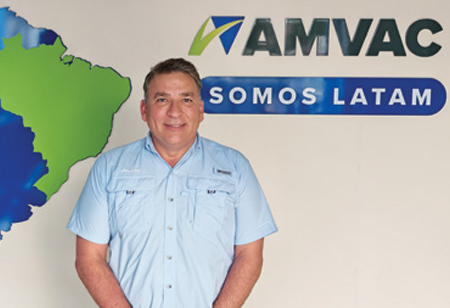
Max Martinez, Commercial Director
Crop protection and plant health solutions often fall short when they are removed from field realities. AMVAC Latam anchors its approach at the farm gate, where crop challenges are defined by actual growing conditions. Working closely with growers, it develops crop protection and plant health solutions based on these on-ground requirements. This direct engagement also shapes how these solutions are applied in the field, combining technical expertise with field insight to drive consistent results.

Agrochemical Services: Crop Protection Distribution across Latin America

Agricultural crop protection and agrochemical distributors in Latin America function as critical intermediaries between manufacturers and the region’s diverse farming communities, ensuring that essential inputs reach fields where they directly influence productivity and crop health. Their role extends beyond logistics, encompassing technical guidance, inventory planning, and localized knowledge of crop cycles, pest pressures, and climatic conditions. Given the scale and diversity of agriculture across the region, distribution networks must adapt to varying crop types, farm sizes, and geographic challenges, from large-scale commercial operations to smaller, fragmented holdings.

Aligning Crop Protection Distribution with Field-Level Reality

Agricultural executives evaluating crop protection and agrochemical distribution partners face a persistent tension between product availability and real-world effectiveness. Inputs alone rarely determine outcomes. What matters is, how well those inputs are adapted to field conditions, how consistently they perform across seasons and how effectively they are supported through technical guidance. Many distributors still operate as transactional intermediaries, prioritizing volume over agronomic alignment, which leaves growers navigating variability without sufficient support.

The Role of Bio-specialties in Sustainable Agriculture
Grupo AJE
The Role of Bio-specialties in Sustainable Agriculture
Armando Russi, Head of Sustainability, Comms & Public Affairs

Armando Russi, Head of Sustainability, Communications & Public Affairs at AJE Group and Executive President of the International Chamber of Climate Business (CINC), is a Chemical Engineer and Master of Environmental Management. Honing expertise in sustainability and ESG management in consumer goods, he specializes in specialty bioeconomy, decarbonization, and productive value chains. 

Crop Protection Distributors Face Tighter Planning as Farm Input Decisions Become Less Predictable

Thursday, June 11, 2026

A grower delaying a herbicide order by two weeks can create more disruption than it first appears. For agricultural crop protection and agrochemical distributors, late-season purchasing decisions are making inventory planning harder, especially when weather shifts, crop disease pressure and cash-flow caution collide during narrow application windows. The position of a distributor has always been contingent on the timing game. Pest management products need to be accessible in proximity to the farm at the onset of pest pressure. Yet, too much of the product becomes costly in a matter of moments if the circumstances turn out differently. This situation is proving difficult as more growers adopt a cautious approach in their input decisions. Some farmers are opting to purchase products at the time of application instead of planning ahead, while others do not want surplus product. Others have taken up a reactive position in response to field conditions. This leaves the distributor with an inconsistent order flow, while still needing to obtain the product and prepare the distribution network. Agrochemical distributors are also dealing with greater complexity in product selection. Farmers may need a specific formulation, tank-mix compatibility or crop-stage guidance before placing an order. Substitution is not always simple. A product that works in one field condition may not fit another because of label restrictions, resistance management plans or application timing. This makes support for agronomy even more important. The distributor not only provides chemicals, but also helps farmers to select appropriate programs depending on local weed pressure, insect activity, and disease risks. These activities should contribute positively to relationship building with customers; however, they increase the importance of hiring qualified personnel during the high season. Nevertheless, the inventory risk still plays an important role. Having an insufficient amount of product may hurt the reputation since growers require immediate delivery. At the same time, having an excessive amount of product may put the company at risk of financial losses. This problem becomes particularly acute for small companies lacking bargaining power compared to their big competitors. However, the risk does not stop at the question of quantity only. Timeliness also becomes essential in crop protection since this type of product tends to reach distributors during the fieldwork season, thus affecting timely spraying. Failure to deliver may delay a process significantly. In this sense, crop protection relies heavily on logistics. In order to solve the problem, some companies tend to improve their demand forecasting due to better communication with growers. Other companies try to coordinate the work of suppliers and prioritize particular products. The goal is not simply to stock more, but to stock with better discipline. For the industry, the bottom line is very simple. Crop protection products are moving away from the need to provide broad access and toward accuracy in delivery, agronomic know-how, and financial management. For distributors that navigate these challenges wisely, the upcoming season could bring rewards.

Agrochemical Buyers Push Distributors for More Guidance as Product Choices Grow More Complicated

Thursday, June 11, 2026

A farmer choosing a crop protection program is often making a sequence of decisions rather than a single purchase. Herbicide selection may affect later fungicide timing. Insect pressure may change after planting. Resistance concerns may limit which active ingredients can be used repeatedly. For agrochemical distributors, that complexity is changing the customer conversation. The distributor is no longer viewed only as a product source in many farm markets. Growers increasingly expect practical guidance on application timing, product rotation and local field conditions. That creates a wider service expectation, particularly in regions where pest patterns are less predictable or resistance issues are becoming more difficult to manage. This shift matters because crop protection mistakes can be expensive. A poorly timed application may reduce product effectiveness. A wrong product match can create crop safety concerns or fail to control the target pest. Even when the product is technically available, the buyer still needs confidence that it fits the field conditions. Distributors are responding by strengthening agronomy teams, field scouting support and grower education efforts. These services can help differentiate one supplier from another, though they also raise staffing costs. A distributor that offers advice must be able to back it with product knowledge and local experience. The sales process is becoming more consultative, but not in a polished marketing sense. It is often practical and direct. Growers want to know whether a product will work under current pressure, whether it can be mixed with another input and whether weather may affect performance. Those are field-level questions, not brochure claims. Product stewardship is also becoming more important. Distributors must communicate label requirements, storage conditions and safe handling practices clearly. The issue is especially relevant when farms employ seasonal labor or rely on outside applicators. A missed instruction can create compliance exposure or field performance problems. Buyer behavior is also influenced by price sensitivity. Farmers may ask for lower-cost alternatives, especially when crop margins are tight. Distributors must balance affordability with agronomic fit. Selling only on price can weaken trust if the product does not perform under the field conditions that prompted the purchase. Digital tools may support this advisory role, but they do not replace local judgment. Ordering portals and product databases can make transactions easier. Still, crop protection decisions often depend on soil conditions, crop stage, pest identification and application timing. Those details are difficult to reduce to a standard ordering workflow. The more complicated the product environment becomes, the more value growers place on distributors that explain tradeoffs clearly. That does not mean every distributor needs to become a full agronomy consultancy. It does mean product availability alone may not be enough to hold customer loyalty. For agrochemical distributors, the buyer relationship is moving toward a service-heavy model. The winning factor may be the ability to combine product access with practical field advice, especially when growers are trying to protect yield without adding unnecessary input cost.

Compliance and Stewardship Pressures Add New Weight to Agrochemical Distribution

Thursday, June 11, 2026

Agrochemical distribution depends on more than getting product into the hands of growers. Storage rules, transport documentation, product labeling and safe handling practices shape how distributors operate every day. As scrutiny around agricultural inputs increases, crop protection suppliers are facing a heavier stewardship burden. The pressure sits across the distribution chain. Warehouses must manage product segregation and temperature-sensitive storage where required. Transport teams need correct documentation. Sales staff must understand label directions well enough to avoid vague or risky advice. These requirements can be routine, but they become difficult during peak demand periods. The seasonal nature of crop protection makes compliance harder to manage. Large product volumes may move in a short period when growers are racing against the weather and field conditions. During those windows, documentation accuracy, loading discipline and customer communication become more important. Small errors can create costly delays. Distributors also carry responsibility for product stewardship. That includes helping growers understand application restrictions, disposal expectations and safe storage practices. These are not always headline issues, but they are central to maintaining trust with regulators, suppliers and farm customers. The issue becomes more sensitive when distributors handle a broad product portfolio. Different crop protection products may carry different handling requirements. Some may have strict use conditions. Others may require careful communication around resistance management. Staff training must keep pace with the range of products being sold. Smaller distributors may feel this pressure more sharply. They often operate with lean teams and limited administrative support. A new documentation requirement or supplier audit can absorb time that would otherwise go toward sales calls, deliveries or grower support. Larger firms may have dedicated compliance staff, but they also face more complex oversight across multiple locations. Suppliers are also impacted. Agrochemical companies depend on their distributors to communicate a proper message regarding their products to farmers in the field. With poor communication and documentation regarding stewardship practices, agrochemical companies may be inclined to work with select distributors only. Technology can help with records management, though implementation is not always simple. Digital inventory systems, delivery logs and compliance checklists can reduce paperwork gaps. The challenge is making those systems usable during busy periods when employees are loading trucks, answering grower questions and managing urgent orders. Training remains the harder part. Compliance depends on people understanding why procedures matter, not just completing forms. Warehouse staff, sales representatives and delivery personnel all touch the risk chain in different ways. A weak handoff can create problems even when the distributor has formal policies in place. The measured takeaway is that stewardship is becoming part of competitive discipline in agrochemical distribution. Buyers may still focus first on price and availability, but suppliers and regulators are watching how products move, how records are kept and how clearly instructions reach the farm.

Agricultural Crop Protection and Agrochemical Distributors Info

Q1
What Do Top Agricultural Crop Protection and Agrochemical Distributors in Latin America Do for Growers and Channel Partners?
They connect crop inputs with the field advice, product access and regional coordination needed to use them well. Top Agricultural Crop Protection and Agrochemical Distributors in Latin America typically work across herbicides, insecticides, fungicides, seed treatments, plant health products and related agronomic support. Their role is not only to move inventory. It is to help growers and dealer networks match products to crop pressure, climate, timing, application method and regulatory expectations.
Q2
What Services Are Included in Agricultural Crop Protection and Agrochemical Distribution?
Agricultural crop protection distributors often combine sourcing, warehousing, technical training, field recommendations, logistics planning and distributor support. Agrochemical distribution services may also include product stewardship, label guidance, residue awareness, safe handling education and seasonal availability planning. Buyers evaluating Top Agricultural Crop Protection and Agrochemical Distributors in Latin America should test how a distributor responds when a pest outbreak compresses delivery windows and field teams need fast technical direction.
Q3
Why Is Demand Growing for Crop Protection and Agrochemical Distribution in Latin America?
Latin American agriculture faces intense pressure to protect yield while managing input cost, resistance, climate variability and sustainability expectations. Demand is rising because farms need dependable access to crop protection solutions, not just more product choices. Top Agricultural Crop Protection and Agrochemical Distributors in Latin America matter when supply timing, crop cycles and local pest dynamics leave little room for guesswork. A delayed treatment can affect an entire harvest window.
Q4
How Are Leading Crop Protection and Agrochemical Distributors Selected?
Strong evaluation looks at product breadth, supplier discipline, field knowledge, logistics reliability, regulatory care and support for local partners. Selection should also examine how recommendations are validated before reaching growers. When comparing Top Agricultural Crop Protection and Agrochemical Distributors in Latin America, decision-makers can review a real crop scenario, such as a disease pressure spike during rainy conditions, then ask how the distributor coordinates product choice, stock availability, application guidance and follow-up.
Q5
What Business Value Do Agrochemical Distribution Services Create?
Reliable agrochemical distribution services reduce missed applications, excess inventory, unsafe handling and costly product mismatches. For growers, the value appears in healthier crops, clearer treatment plans and better use of equipment, water and labor. For channel partners, Top Agricultural Crop Protection and Agrochemical Distributors in Latin America can improve seasonal planning, training quality and customer confidence. The category also helps limit risk when changing regulations or resistance patterns affect product selection.
Q6
What Role Do Innovation and Technical Expertise Play in Crop Protection Distribution?
Innovation in crop protection distribution is increasingly practical: better formulation compatibility, biological and conventional product integration, digital field records, precision application guidance and stronger stewardship programs. Technical expertise gives those tools context. Top Agricultural Crop Protection and Agrochemical Distributors in Latin America must understand how soil, crop stage, pest pressure, weather and application equipment interact before recommending a solution. Technology helps, but field judgment still decides whether it works.