Thank you for Subscribing to Agri Business Review Weekly Brief
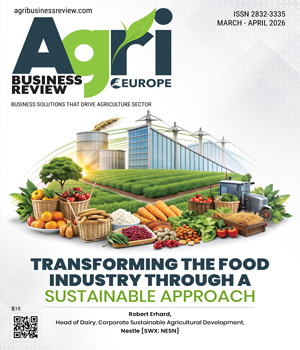
Agri Business Review: Specials Magazine
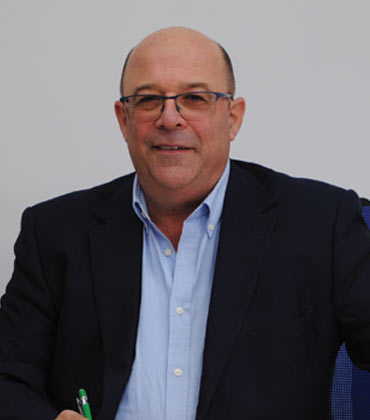
Robert Erhard is the head of dairy and corporate sustainable agricultural development at Nestle. He is a leader in developing dairy operations, innovation, and sustainability strategies. His career has been focused on the dairy sector, comprising various roles. He has significantly contributed to Nestle's agricultural services in Greater China and the Dairy Farming Institute in China using his extensive experience in dairy, food safety, procurement, and cross-functional leadership. Robert has expertise in strategy, analysis, and climate initiatives. What is your current role in the organization, and how do your day-to-day activities go? I currently hold the position of Global Technical Lead in the dairy division. In this role, I monitor Nestle's global fresh milk sourcing operations across 27 countries. My responsibilities include providing technical expertise and support for developing sustainable supply chains with our farm suppliers. It involves working closely with teams worldwide, ensuring direct farm procurement functions smoothly. Along with managing the operational aspects, I coordinate tasks related to environmental, social, and governance (ESG) initiatives aligned with Nestle's commitment to climate action and regenerative agriculture. This consists of collaborating with our research department and the Nestle Institute of Agricultural Sciences, which conducts pioneering research in dairy and coffee. My current global role has expanded to encompass operational oversight, pricing strategies, and the transformation of supply chains for the betterment of all stakeholders. Beyond my role at Nestle, I hold two significant external positions where I serve as a direct advisor to the Ministry of Agriculture in Switzerland within the Swiss National Committee of the Food and Agriculture Organization (FAO), an officially approved role by the FAO.
Precision Farming Equipment Manufacturer in Europe
Founded in 2010, Guadalsem has carved a specific market in the European agricultural sector with its dedication to providing the best seed genetics. The company’s commitment to sustainable crop cultivation and increasing farmer incomes has set it apart, especially in the wake of Europe’s food price crises and shortages. Guided by the visionary leadership of Olivier Crassous and sustained without external financial investments, Guadalsem stands as a testament to innovation and resilience in agricultural advancements. Its services can be broadly classified into two main categories—breeding, producing, and marketing premium seeds, along with offering seed production services to multinational corporations. Guadalsem’s journey began with cotton when it launched its flagship K product line, focusing on traits like adaptability, growth cycle, productivity, and fiber quality. In a significant move in 2014, the company partnered with key players in the global cotton market to develop a robust genetic improvement program. This initiative brought forth a portfolio of non-GMO cotton varieties tailored to the agroclimatic conditions of Spain, Greece, and Turkey, providing European farmers with access to world-class genetic advancements in cotton. The company’s foray into cereal breeding, targeting the underrepresented spring species, further exemplifies its commitment to innovation and diversification. This strategic expansion complements its cotton market expertise, ensuring Guadalsem remains at the forefront of agricultural development with a portfolio that responds adeptly to the food industry’s evolving needs. As a mark of quality, Guadalsem’s certification represents a pledge to its cutting-edge breeding practices and influence in shaping the future of global agriculture. The same level of proficiency also extends to its second business line—seed production services, which has solidified its status as a provider of choice for large-scale crops, such as sunflower, rapeseed, and cotton. Its quality and purity standards have garnered the trust of many major global corporations, leading to formidable partnerships. For instance, the company’s fruitful collaborations with prominent international seed corporations such as Bayer AG, Corteva Agriscience, BASF, Lidea, Limagrain, and RAGT have been a driving force behind the continual expansion of Guadalsem’s activities. “Our dedication to sustainability has been recognised with the prestigious ‘Premios Andalucía Excelente’ award in the Sustainability category for two consecutive years, 2021 and 2022,” says Crassous, general manager. These accolades affirm Guadalsem’s role as a catalyst in Europe’s sustainable agricultural endeavours. The European Cotton Renaissance with Guadalsem’s Non-GMO Revolution In an industry predominantly governed by genetically modified organisms, Guadalsem stands apart, securing a specific market in the cultivation of non-GMO cotton within the European market—specifically in Spain, Greece, and Turkey, with the latter being an especially key market. This strategic positioning is significant in a sector where GMOs account for the vast majority of global production. Confronting the decline of non-GMO cotton breeding programs in Europe, a challenge precipitated by the withdrawal of two major U.S. industry entities, Delta Pine and Phytogen, Guadalsem has played a crucial role in safeguarding the cotton industry from potential downturns in productivity and sustainability. With a focused and innovative approach, Guadalsem has benefited from his collaborations of advanced techniques, such as molecular markers and comprehensive data analytics, to enhance both the reliability and productivity of its cotton varieties. This proactive strategy became essential in maintaining and progressing the cotton sector in these targeted regions. Today, the success of the cotton breeding program is instrumental in ensuring the longevity and sustainability of cotton cultivation in Europe. While the market in countries like India, China, or the U.S. vastly overshadows that of Europe, the combined market potential of approximately 450,000 hectares in Turkey, 260,000 in Greece, and 52,000 in Spain is still quite substantial. This specific market presents Guadalsem with a distinct opportunity for growth and success. “We are one of the primary cotton seed producers in Europe, and our superior-quality seeds have yielded considerable success, with sales in Spain accounting for 46 percent of their turnover, while exports to Greece and Turkey comprise 54 percent,” says Crassous.
AI- Powered Agriculture Solutions in Europe
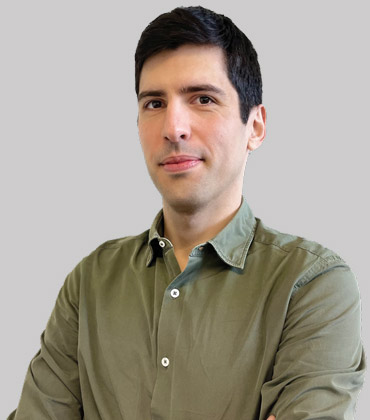
Farming today is a blend of tradition and technology, but it comes with challenges that require balancing both. Farmers face pressure to improve productivity, manage resources efficiently, and navigate complex regulations-all while handling data on weather patterns, soil conditions, and crop health that must be seamlessly integrated across operations. To address these challenges, farmers increasingly rely on apps and tools. Platforms like FieldClimate provide accurate weather forecasts and CropX offers insights for efficient irrigation. Crop health monitoring apps combine satellite imagery with sensor data, while accounting tools like Sage streamline financial and resource management and Sentinel-Hub provides periodic satellite imagery of crops' vegetation health. While these solutions add immense value, managing multiple platforms can be overwhelming. Switching between systems to monitor irrigation, track pests, manage finances, and plan activities creates inefficiencies and fragmented data, leading to missed opportunities and unoptimized outcomes. This is where Wisecrop steps in with its state-of-the-art agricultural operating system. Acting as a centralized platform, Wisecrop unifies data from various sources, automates processes, and seamlessly connects field operations with business needs. By integrating these tools into one cohesive system, Wisecrop simplifies farm management and maximizes efficiency. Digitizing Agriculture for Transparency and Connectivity Wisecrop’s mission extends beyond simplifying farm management-it aims to bring the agricultural industry into the digital age by creating a more transparent food value chain. “We believe farmers are way too undervalued, and restoring the value they deserve is achievable through wise digitization,” says Tiago Sá, CEO and Co-founder of Wisecrop. The platform transforms physical assets into data points-from climate conditions to crop health and field operations-and enables proactive management and predictive analysis, offering insights that empower farmers to address potential issues before they escalate. Digitizing everything from soil health to machinery use not only boosts productivity but also strengthens the connection between farm operations and consumer awareness.
Agricultural Machine Learning Software in Europe
Farmers today enrich their soils by planting cover crops, reducing tillage and implementing diverse crop rotations. These practices also promise to generate income by storing carbon, which can be sold as credits. Recover Ag—an agricultural technology company—is making that promise practical with next-generation MMRV technology (Measuring, Monitoring, Reporting and Verification). Through initiatives such as the California Soil Restoration Project, farmers adopt practices that build carbon in their soils while Recover Ag manages the measurement behind the scenes. The company turns conservation into consistent profit by making soil carbon accounting accurate, scalable and affordable. So why has this been difficult until now? The barrier lies in how soil carbon accounting is currently managed. Most “carbon farming” projects use a “measure and model” accounting method. They measure using random selection of sampling locations, with limited coverage, often just one soil core every 20 to 40 acres. But random sampling does not account for the variation in soil carbon concentration throughout a field, which is related to factors like slope, cardinal direction, drainage and vegetation. Measurement of soil carbon through random, sparse sampling has very high levels of uncertainty. That uncertainty has prompted the registries that verify soil carbon projects to apply a large “uncertainty deduction” to the number of credits issued by a project. The deducted credits do not generate revenue for farmers or project operators. Current MMRV systems also rely on “process-based models” to generate predictions of soil carbon change without the high cost of soil sampling. Researchers have developed process-based models over the past few decades to simulate the behavior of a cropland ecosystem. They are very helpful for exploring research hypotheses, but they do not generate measurements that are accurate or precise enough for soil carbon credit accounting. Recover Ag is introducing several innovations to make the “measure and model” carbon accounting method accurate and precise enough to work for carbon credit issuance. Instead of random sampling, Recover Ag utilizes satellite imaging and other data to identify the zones in a field that are most likely to have variations in soil carbon levels. Recover Ag creates sampling plans that optimize coverage of the zone. The resulting samples are more representative and collected at a higher density, which increases the accuracy of the field-level measurements.

CXO INSIGHTS

Building Successful International Marketing Strategies for Seed Treatment
Palle Pedersen, Global Head Disease Control, Syngenta Seedcare
Encouraging Sustainable Agricultural Practices
Laetitia Domange, Development Director - Agricultural Business Unit, Groupe Coopératif Maïsadour
The Transformational Journey of Agriculture in Azucarera
Salomé Santos Lorenzo, Agriculture Director, Azucarera

Achieving Sustainable Farming Practices
Petra Massoner, Head of Agricultural Center of Competence, Loacker
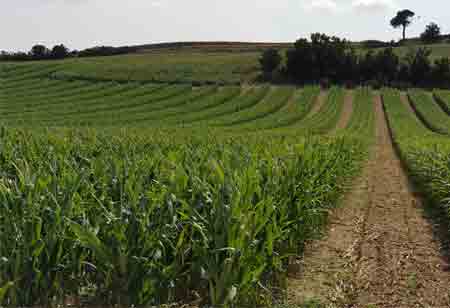
A system of agricultural practices helps restore soil health, increase biodiversity and capture carbon.
Edivan Panisson, Director of procurement and sustainability, Ambev [BVMF: ABEV3]
IN FOCUS
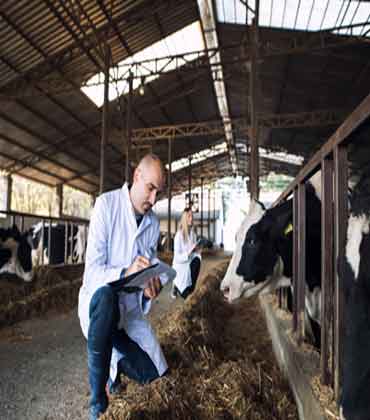
The Flexibility of Smart Livestock Fences in the UK
Smart livestock fences, via GPS collars and apps, offer UK farmers flexible, customisable grazing boundaries. They reduce labour, improve pasture management, enhance animal welfare, and boost efficiency. They also enable remote control.
EDITORIAL
The Meteoric Rise of the Agri-business Market in Europe
The European agri-business market plays a pivotal role in the continent’s economy, contributing significantly to employment, exports, and rural development. Valued at over EUR 500 billion, the sector spans primary agriculture, food processing, distribution, and agricultural services. As a key pillar of the EU’s Common Agricultural Policy (CAP), agri-business in Europe supports food security, environmental stewardship, and economic cohesion across member states.
Yet, the industry faces a complex array of challenges that threaten its longterm sustainability. Climate change continues to exert mounting pressure, with rising temperatures, droughts, flooding, and erratic seasonal patterns affecting crop yields and livestock health. These changes also increase vulnerability to pests and diseases, putting strain on both natural and financial resources. The COVID-19 pandemic exposed inefficiencies in supply chains, and the war in Ukraine disrupted grain supplies, energy prices, and fertilizer imports, further complicating production and distribution. Policy volatility, shifting subsidy frameworks under CAP reform, and trade tensions with non-EU countries create uncertainty for agri-business players.
At the same time, the sector is undergoing rapid technological transformation. Precision agriculture, AI-driven decision-making tools, robotics, and satellite monitoring are increasing efficiency and reducing environmental impact. However, smaller farms often face financial and technical barriers to adoption, widening the gap between large agribusinesses and family-run operations.
European consumers are also reshaping the market. Growing demand for organic, locally sourced, and sustainably produced food is forcing supply chains to adapt. Farmers are under increasing pressure to meet stringent environmental regulations and carbon neutrality targets, prompting a shift toward regenerative agriculture, biodiversity conservation, and sustainable water usage.
Despite these headwinds, the European agri-business market remains resilient and innovation-driven. The future lies in harmonizing sustainability with profitability. Public and private investments in agricultural technology, rural infrastructure, and green energy solutions are poised to accelerate growth. Export diversification, enhanced food traceability, and digital integration across the supply chain will ensure agility in responding to both global disruptions and shifting consumer expectations.
While uncertainties remain, Europe’s agri-business sector is charting a forward-looking course. With the right mix of technology, policy alignment, and sustainable practices, it is well-positioned to reinforce its role as a vital contributor to the continent’s economic stability and ecological resilience.
